
Senegal: Pain and Purpose (Part 2)
While you can find almost any luxury imaginable in Dakar, poverty remains a glaring reality. From the shaded windows of the car, I would gaze into the faces of people on the street, wondering what they were thinking and feeling.
One image remains ingrained in my memory: an old blind woman being led through the congested streets by a young girl. Both were in tattered clothing; the woman seemed frustrated, and the girl looked confused. I tried to imagine myself as that girl—then as that old lady. In contrast, I remember three old men sitting outside "shooting the breeze," cracking up with laughter. Though seemingly poor, their joy was infectious; you couldn’t help but smile back.
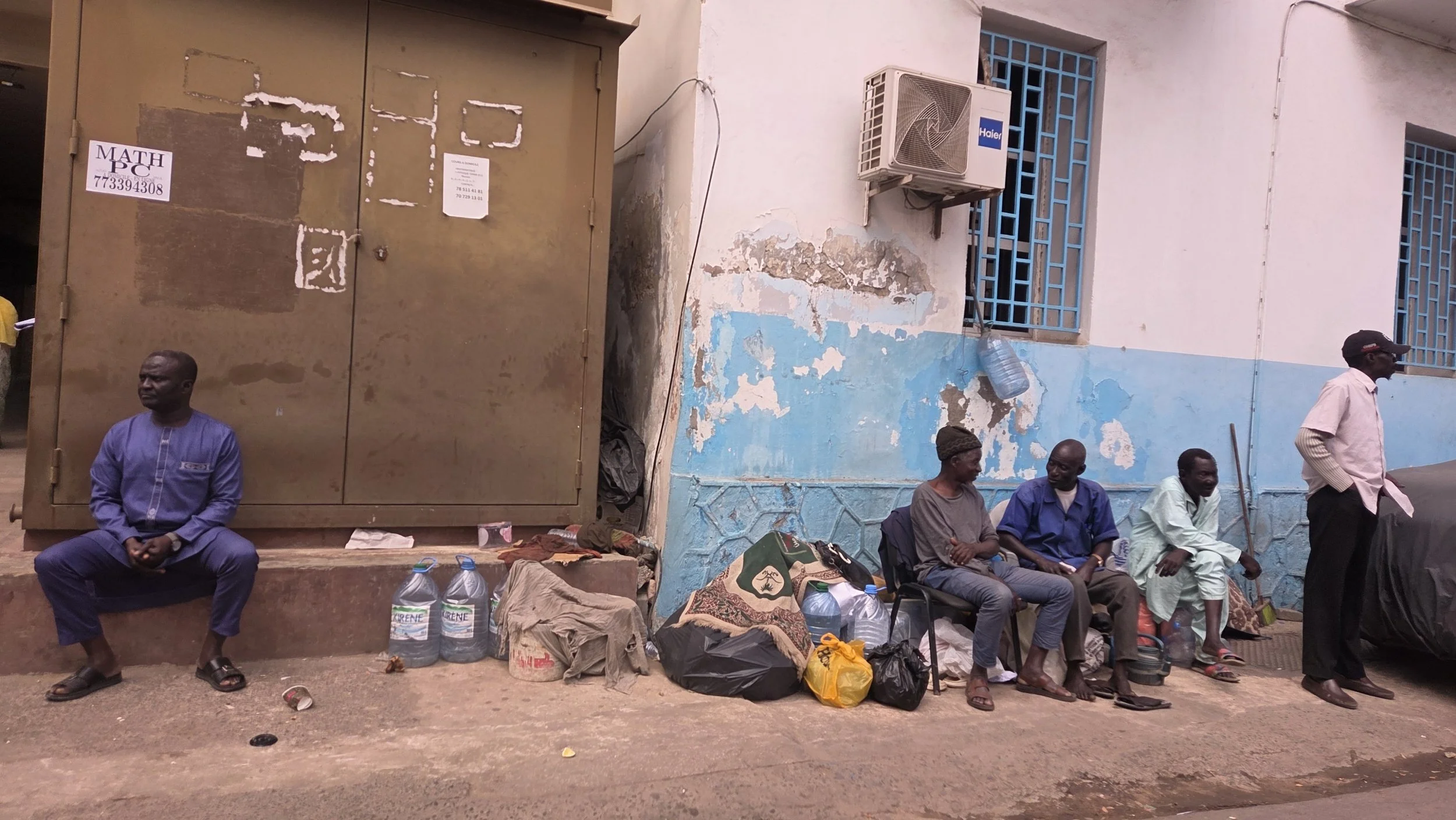
The Three Joyful Men: They had just finished enjoying a deep belly laugh. I wish I had snapped this photo sooner.
I only saw a homeless person sleeping on the streets twice, but the child beggars were almost everywhere. When I asked how these poor and orphan children were cared for, what I heard ranged from the “good”, the ”bad” and the “ugly”. I would learn that some of the children beggars are “Talibé” – boys who live in religious boarding schools and are often abused and forced to beg. So, we decided to visit an orphanage.
The Orphanage: Empire des Enfants
Upon arrival, we were welcomed by two deeply caring staff members, Lamine Mbow and Cheikh Tidiane. My sister and I listened as they described what drew them to this work—a profound love for the children and the fulfillment that comes from getting them off the streets. Even as we sat in the office chatting, we saw members of the community dropping off food and donations.
The work this organization does is incredible. They rescue children, providing food, shelter, education, and enrichment. Their ultimate goal is reunification; they search for the children’s parents to help them return home safely. If the parents are deceased or cannot be found, the children are moved to a home-like setting to be raised. If you want to be truly inspired, look up the story of the founder, Anta Mbow, the Senegalese woman who founded the organization.
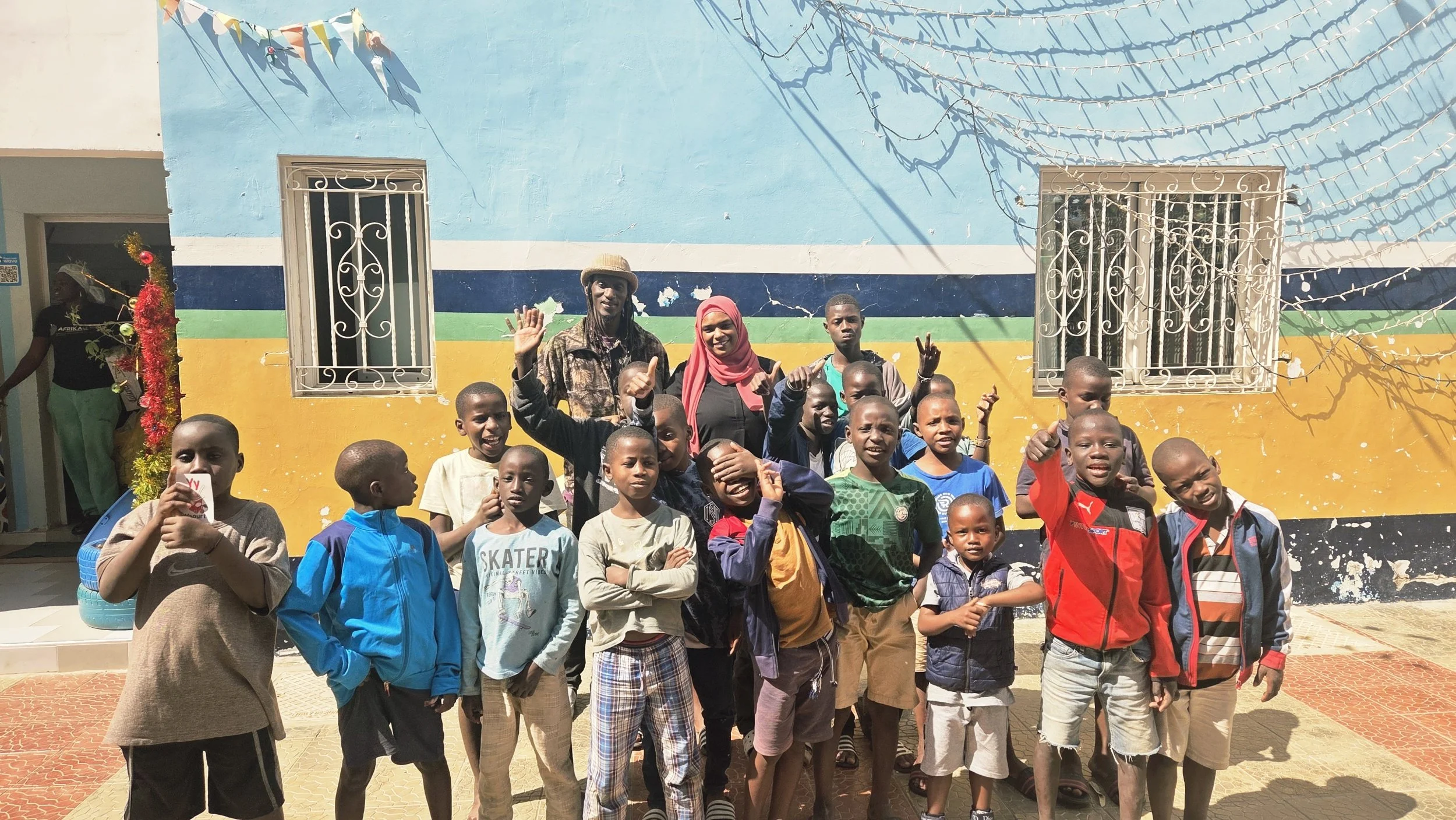
Lamine and The Boys: This day brought back memories of my teaching days. ❤️
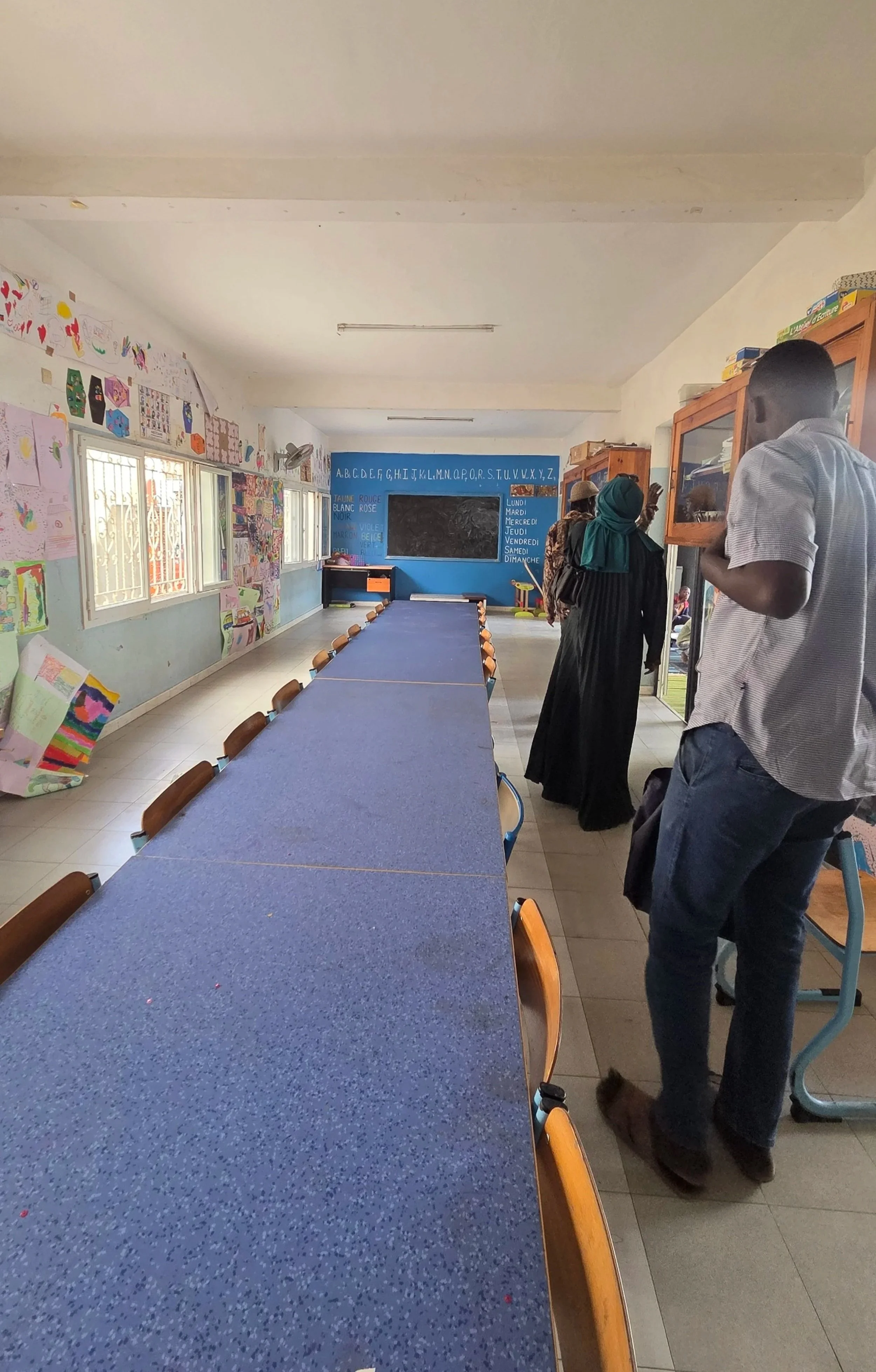
The Classroom: Though children still go to school outside the orphanage, everyday, the neighborhood kids come and play with the children in the orphanage. They make sure the kids are not isolated from the broader community.
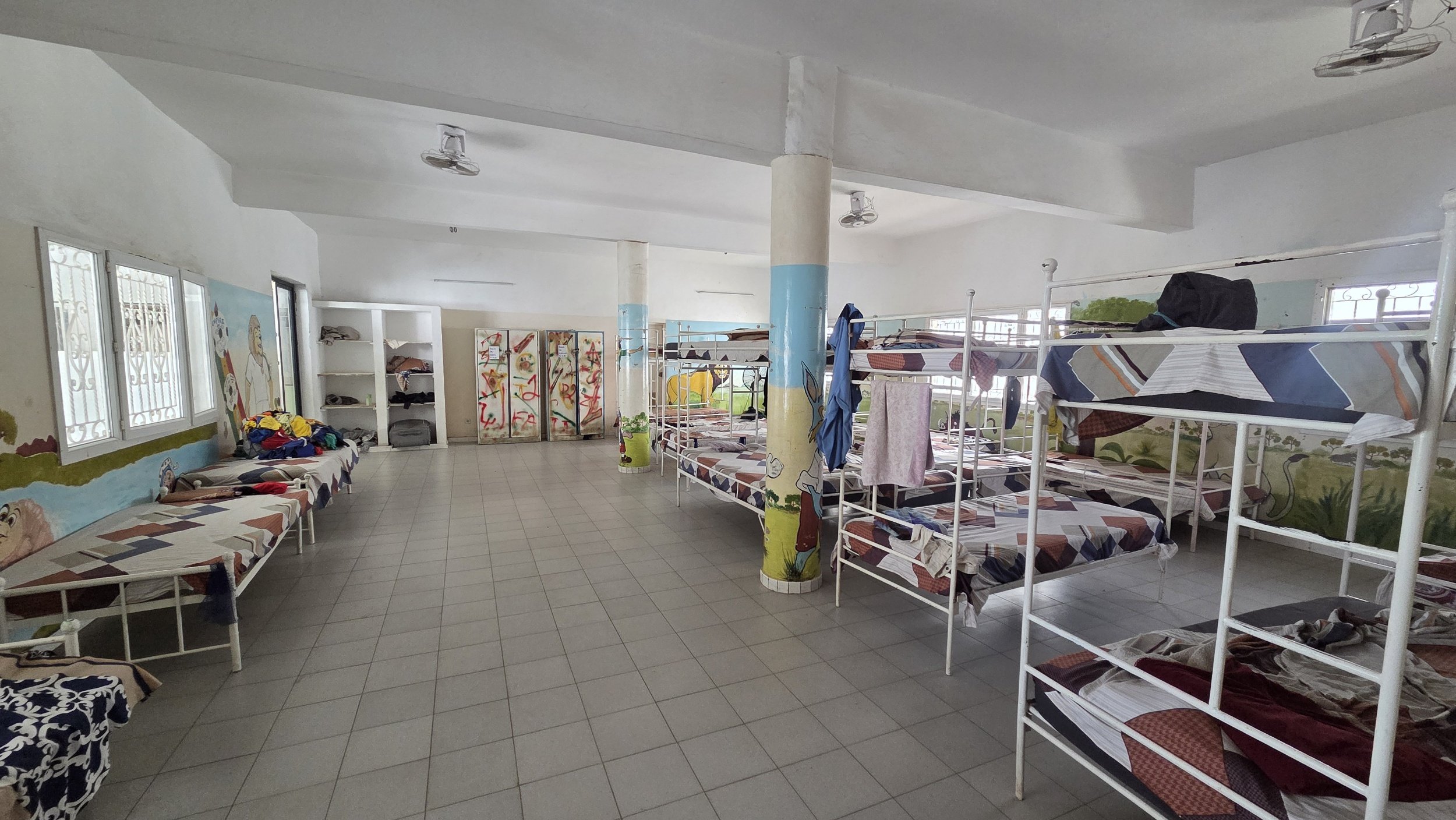
Sleeping Area: Although this place has at most 30 children at a time, when I asked what the capacity of the orphanage is, Lamine said that there is none. They will simply stack more beds or even sleep on the floor if need be. They won’t turn children away.
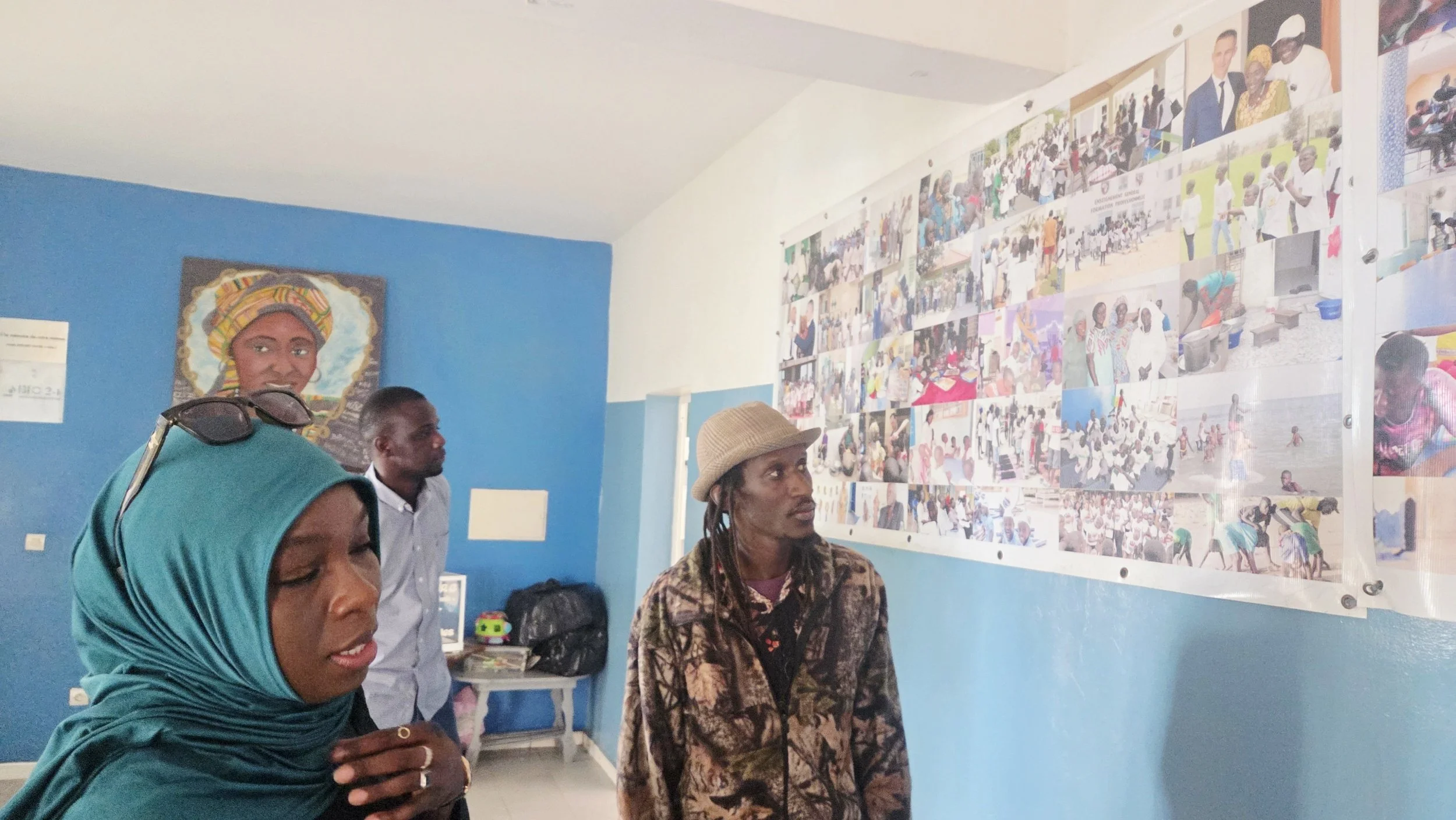
Office Photos: Here, Lamine gives us a tour and shows us photos from events with various partners. I believe that large photo on the wall in the back is of the founder, Anta Mbow.
At Empire des Enfants, we saw the "good." But as we left, I was struck by the heavy responsibility held by those of us living in lands of prosperity. Because of what Allah has bestowed upon us, we absolutely must take full advantage of our opportunities to lift up our families and communities. I felt an intense surge in motivation and desire to do more. Do better.
In a world this cruel, simply working for a comfortable life and offering "a little charity" here and there isn't enough. I was reminded that Allah will ask us about the orphans—and when He does, I want to have the right answer.
The Mosques
No trip for me is complete without visiting as many mosques as possible, and Senegal did not disappoint. In total, we visited seven masjids—not including the two hotel mosques I just had to check out. At every stop, we were welcomed with open arms, given extensive tours, and even invited to meet the Imams to make dua together. The only mosques we didn’t enter were those still under construction.
Each one left a unique mark on my heart:
The Historian : The one with the most interesting history was Mosque of the Divinity.
The Heart-Stealer: The one that truly captured my heart is Goree Mosque
The Giant: The largest mosque in West Africa , Massalikoul Djinane Mosque whose construction was led by a woman!
The Favorite: Though it hasn’t been named yet, the one with an attached learning institute for teaching the Sunnah was number one for me in both style and substance.
The Powerhouse: Also still under construction, the Tivaouane Mosque was the only one with its own power grid (yes, a full grid, not just distributed generation!).
The Pink Mosque: This pink interior of La Mosquee de Serigne Babacar SY took me back to the Pink Mosque in Malaysia!
The Elder: Zawiya de Dakar (I think is the name) is one of the oldest mosques in Dakar - built in defiance of French rule.
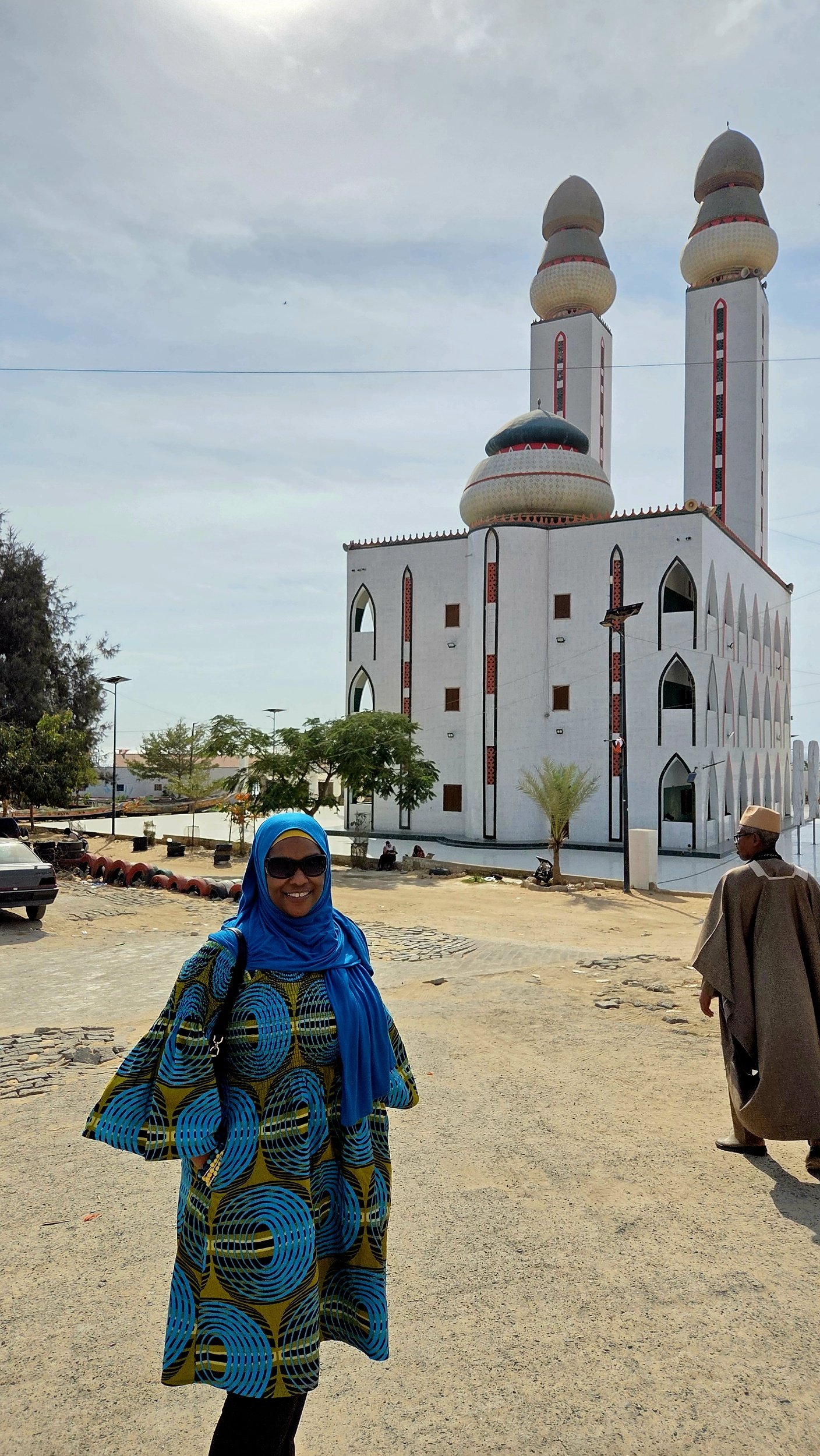
Mosque of the Divinity: The only mosque we visited twice!
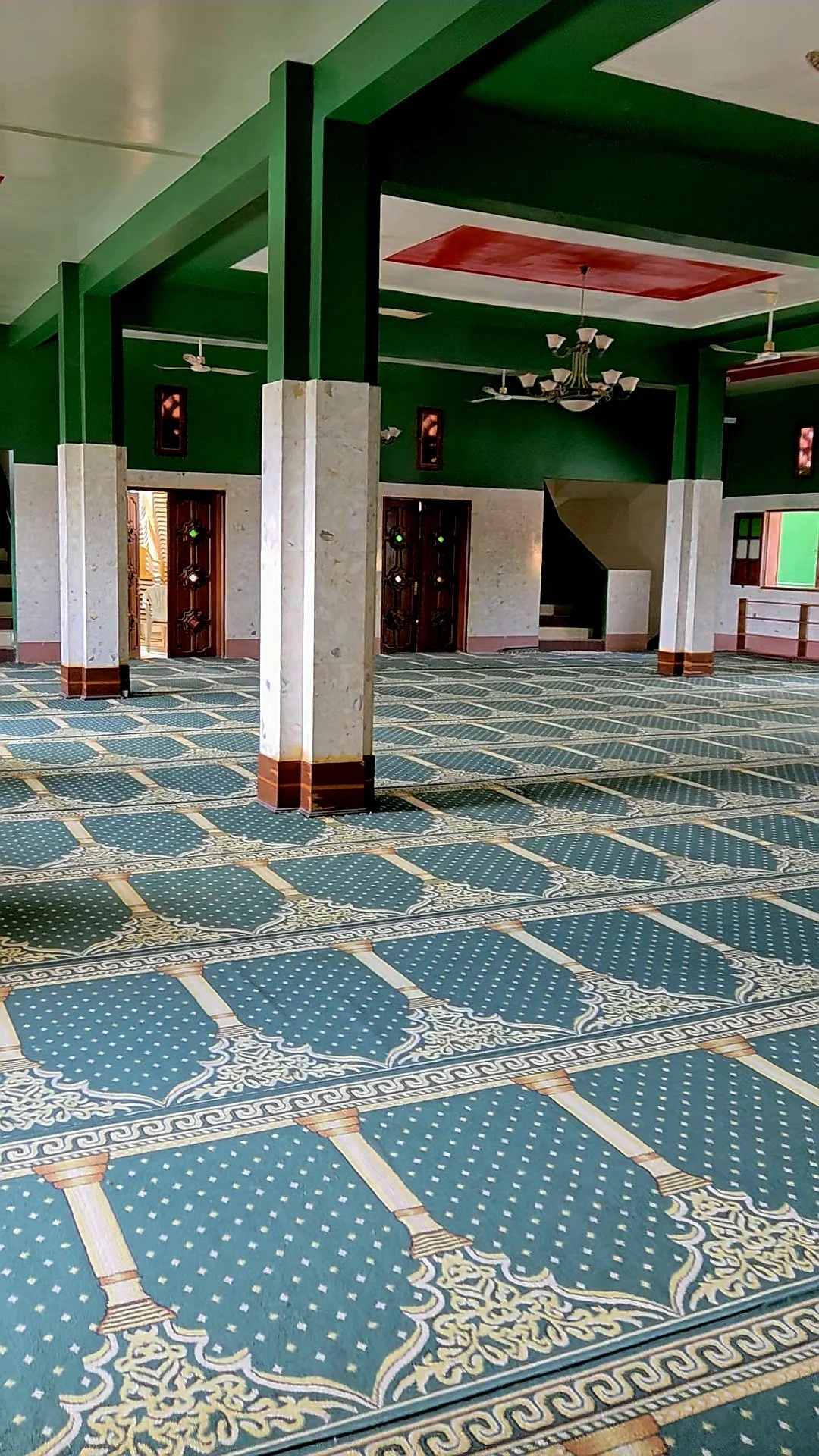
Mosque of the Divinity: One of the two floors in the 3-story mosque for women to pray. Men get the ground floor and the courtyard.
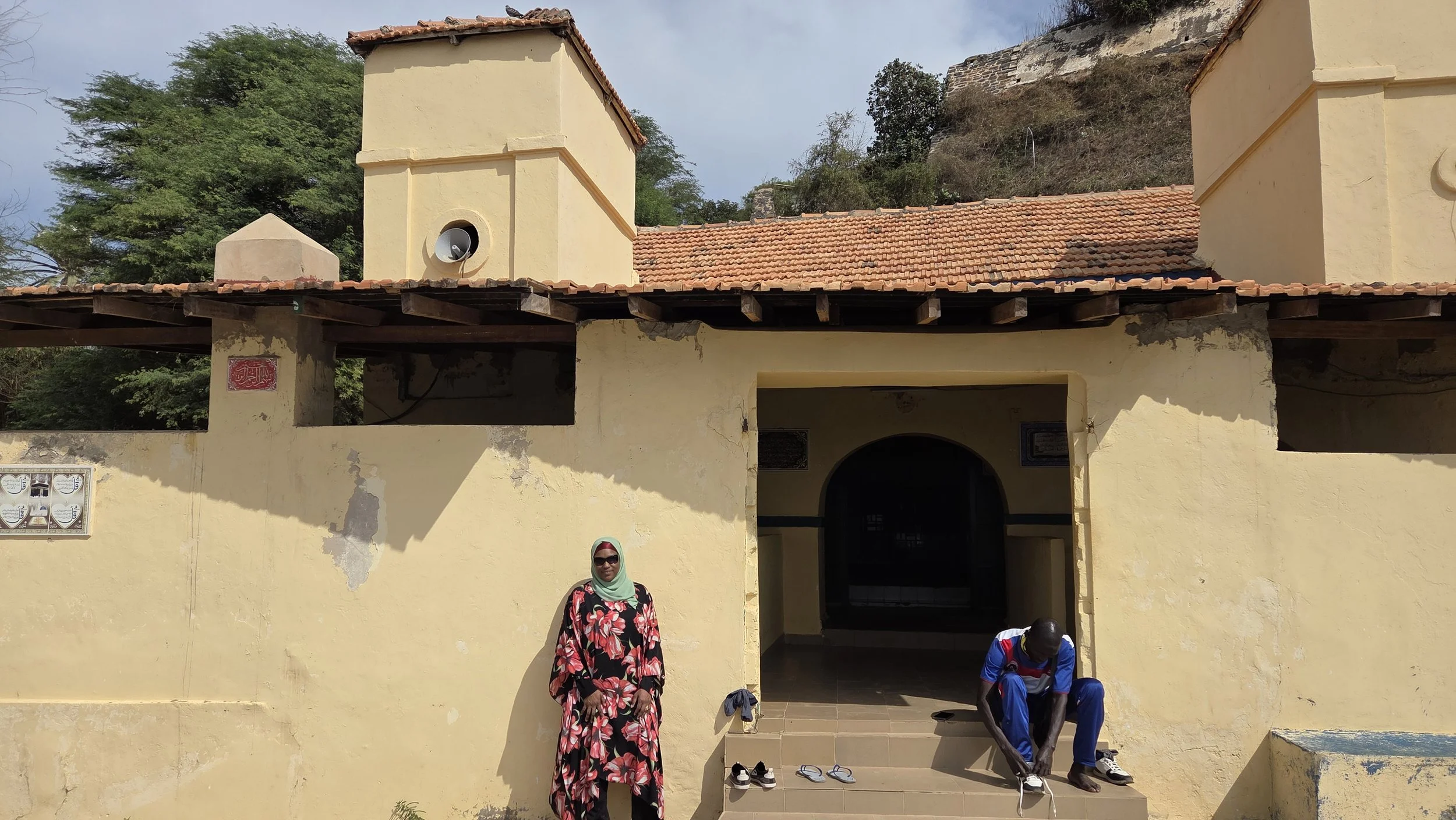
Goree Mosque: Given the history of this island, Goree Mosque captured my heart in a way no other mosque did.
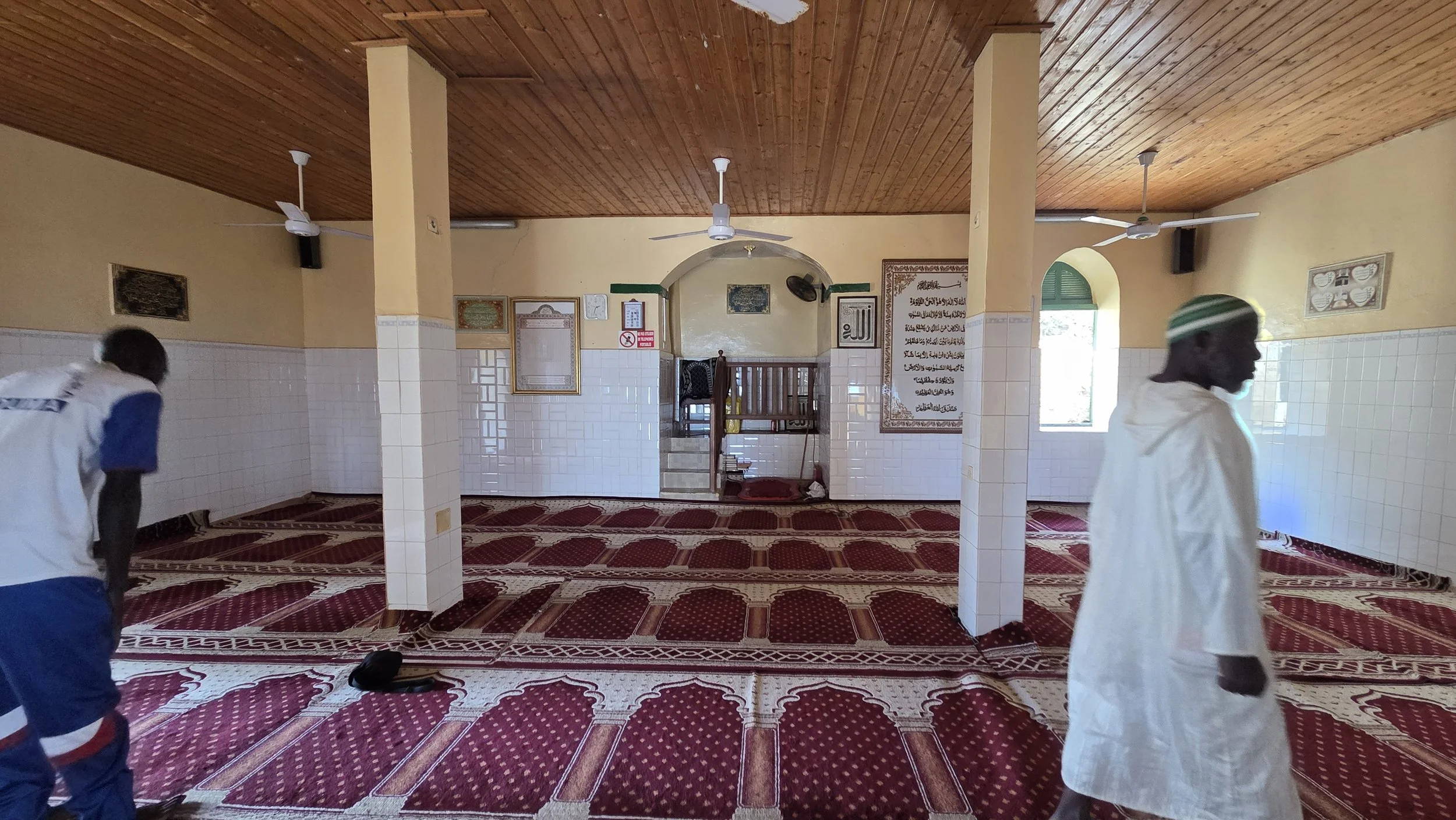
Inside Goree Mosque: This was one of the places where I was offered a prayer rug. I was at the door asking to come in to take photos but they thought I was asking for a rug. But eventually they understood.
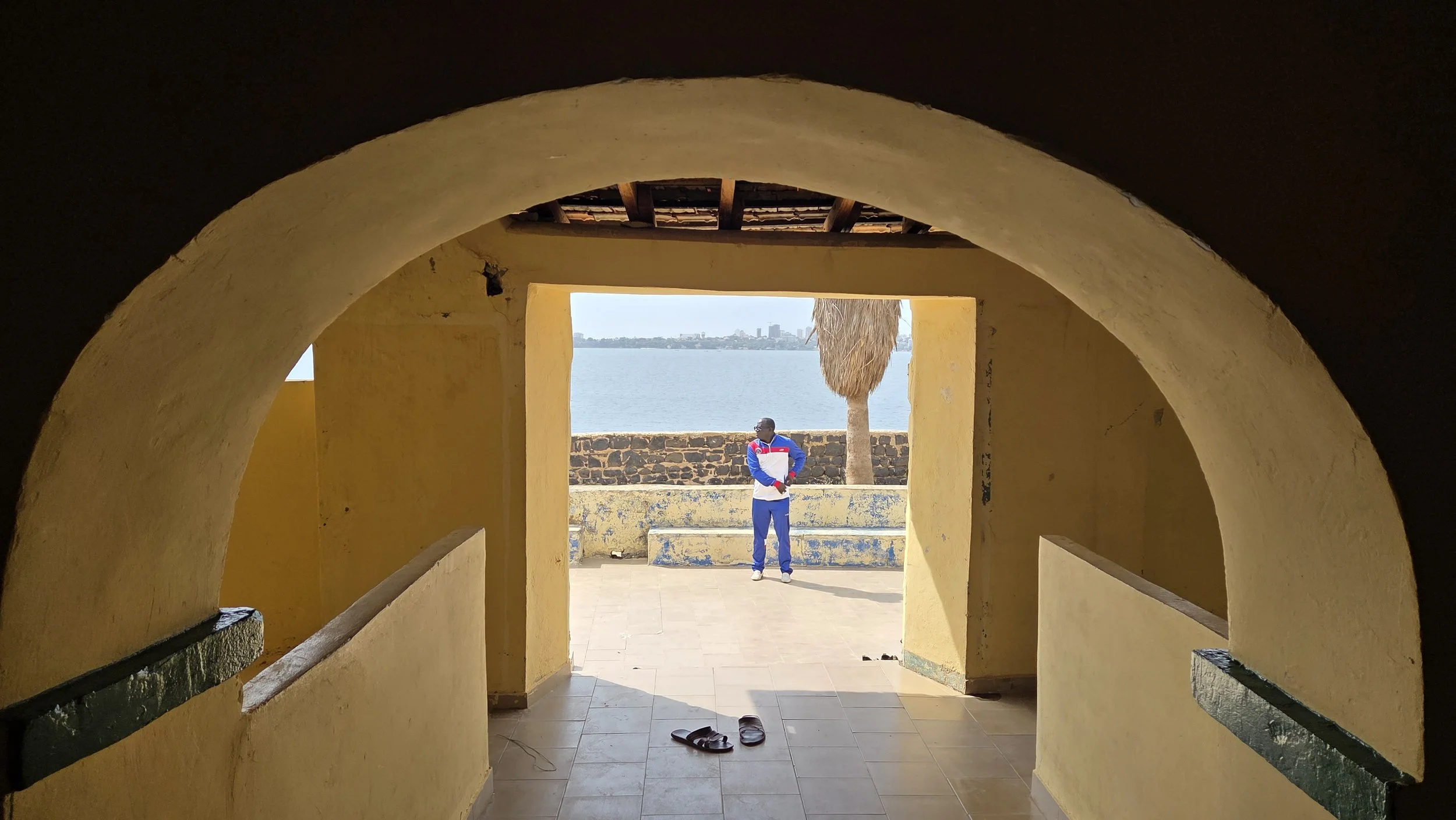
Goree Mosque: The view from just inside the mosque looking out at the water.
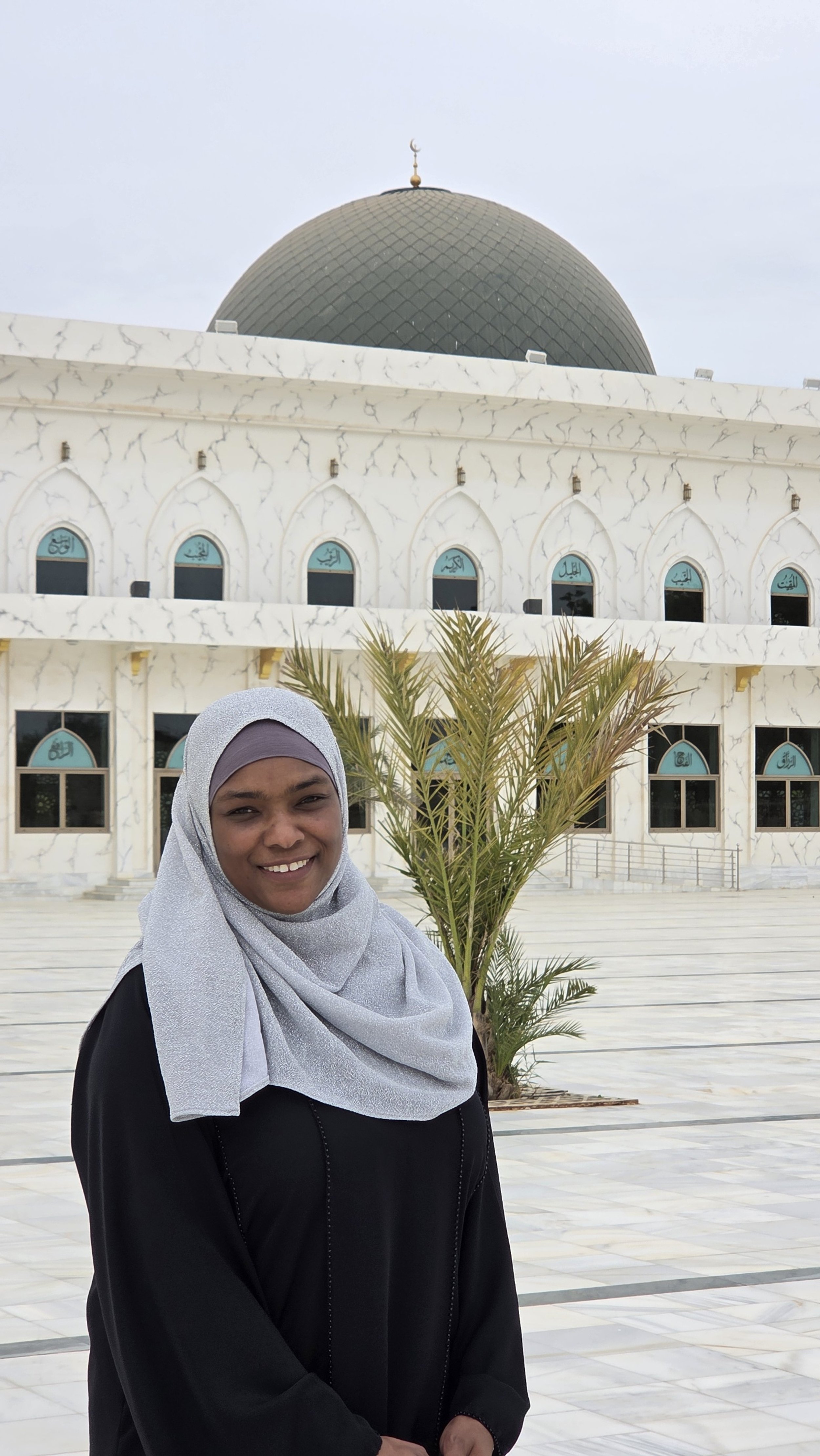
Tivaouane Mosque: We drove an hour and a half to visit this mosque but unfortunately it was still under construction on the inside. So we had to tour the courtyard.
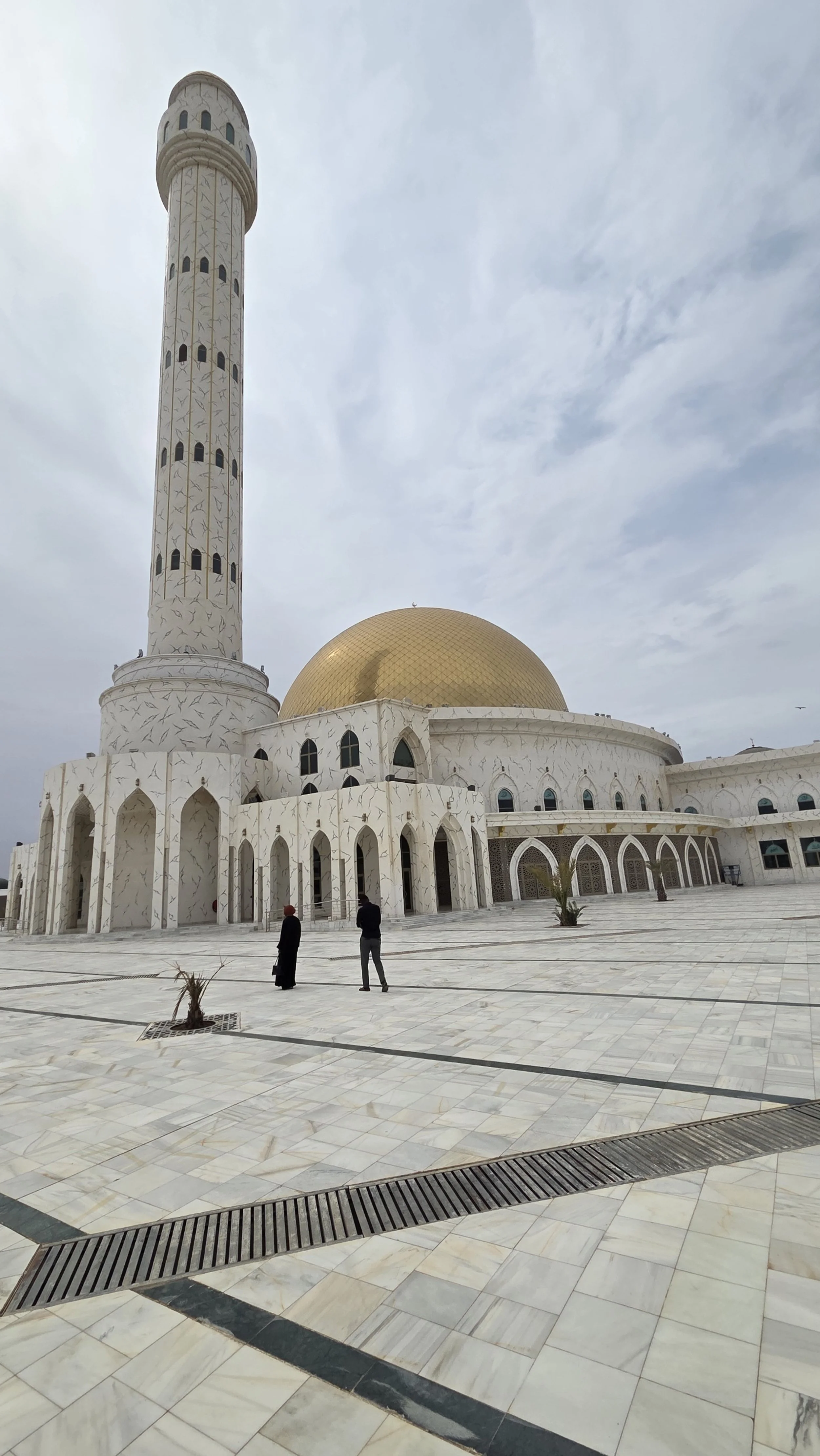
Tivaouane Mosque: This mosque is huge! In fact, the grounds keeper told us that this mosque has its own grid. I was like, “you mean generator”. And he said, “No, grid”. MashaAllah!
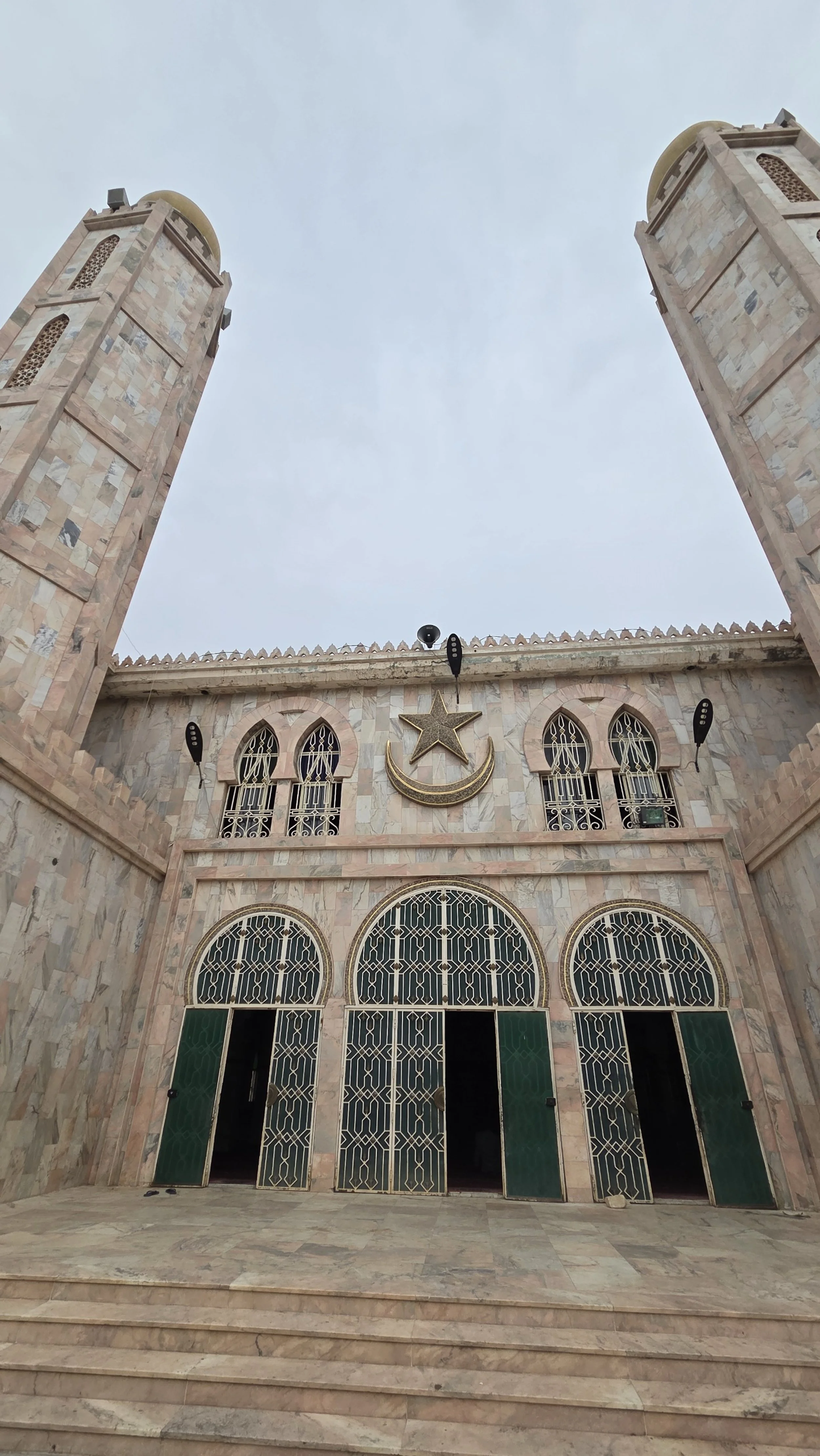
La Mosquee de Serigne Babacar SY: We stopped here to pray because the Tivaouane Mosque was closed. This was the only mosque that we didn’t actually tour. But we did have an interesting encounter with an elder who shared the oral history of Islam in this particular region.
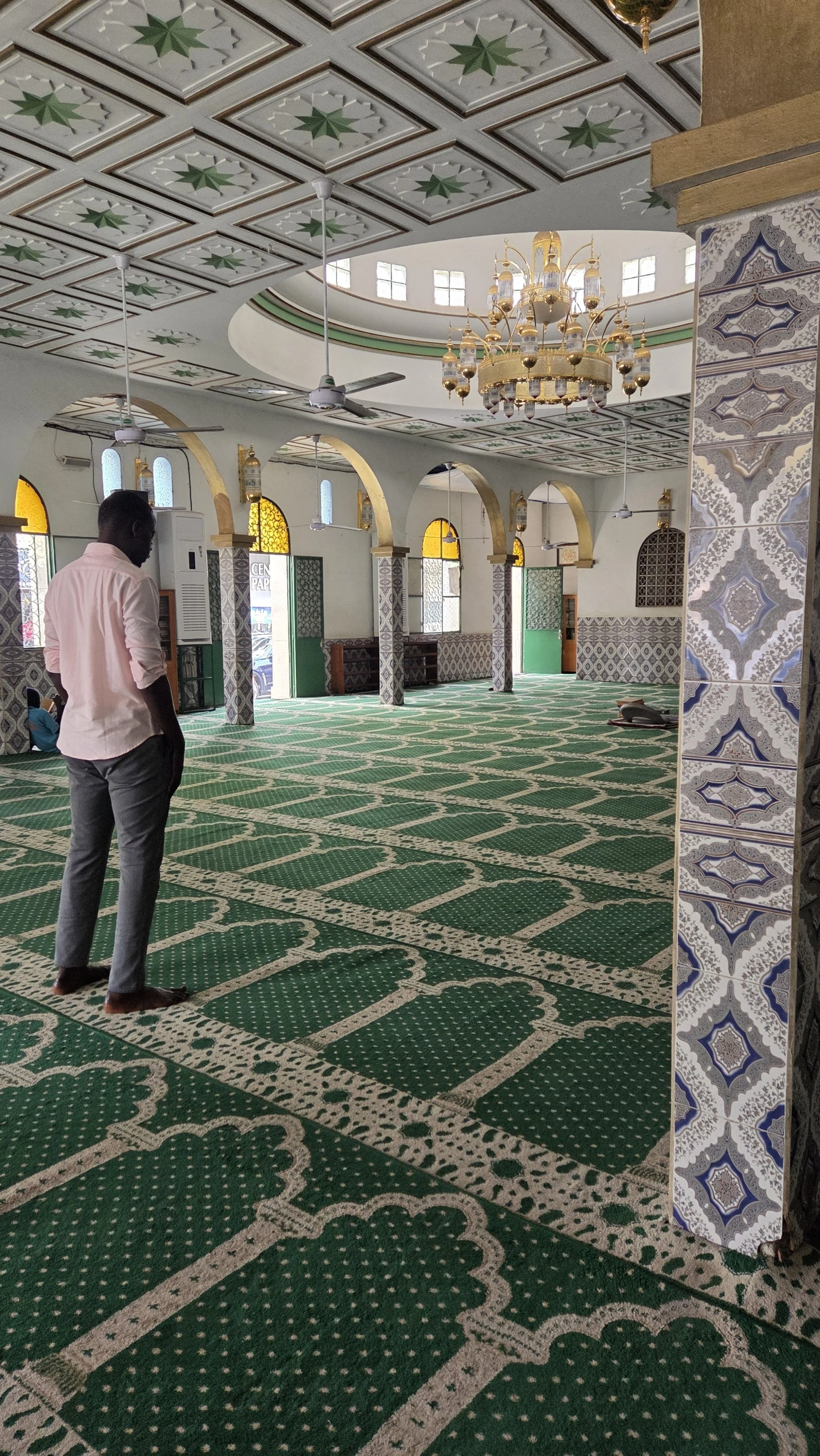
Zawiya de Dakar: This is one of the oldest mosques in Dakar. Alioune mentioned that this mosque is one of several that were built in defiance of French rule. While touring it, we learned that this mosque was set to be demolished (and rebuilt) in two days. We were blessed to be able to see this original mosque just in time.
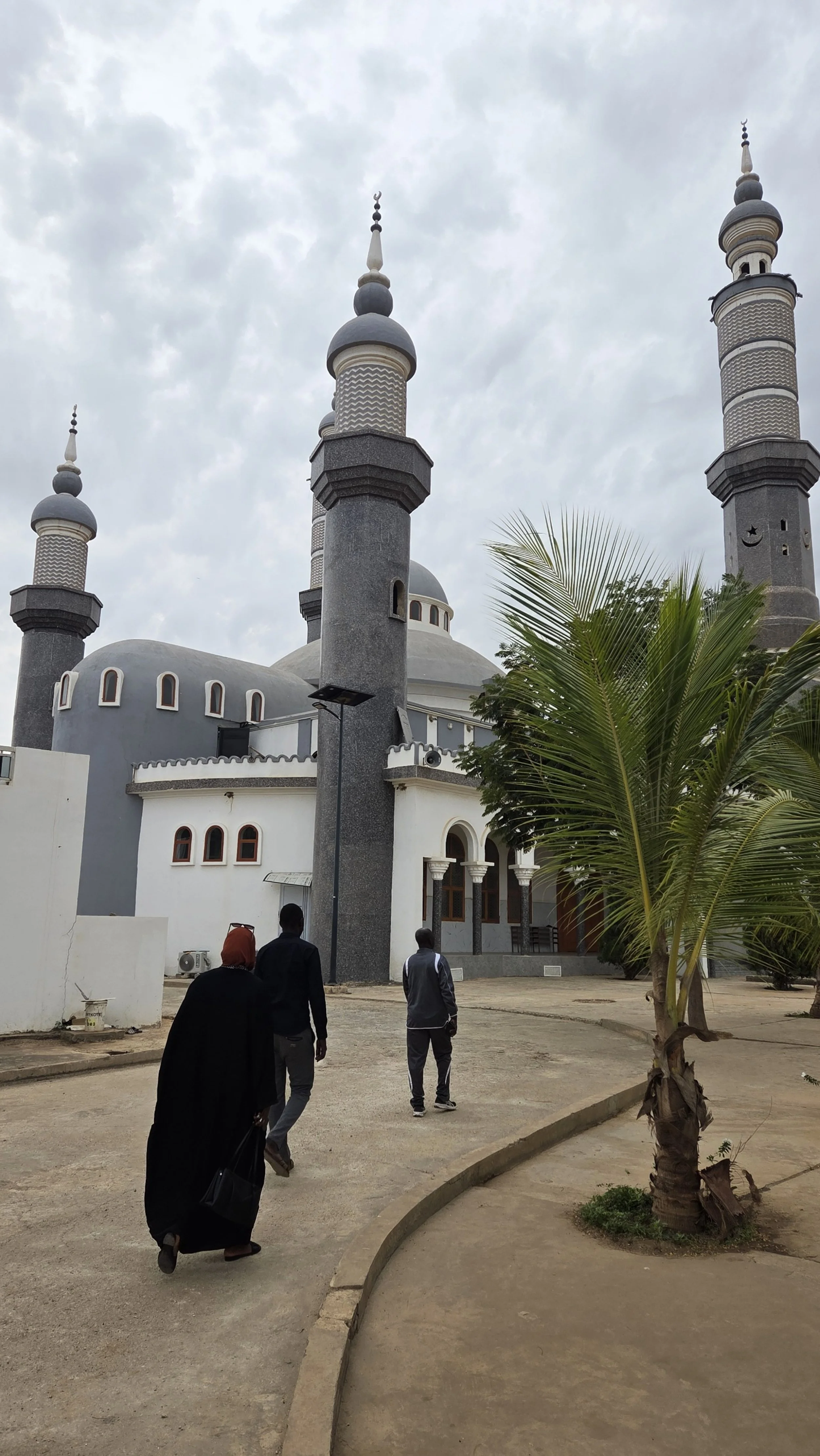
Unnamed Mosque: A large learning institute is under construction behind the mosque.
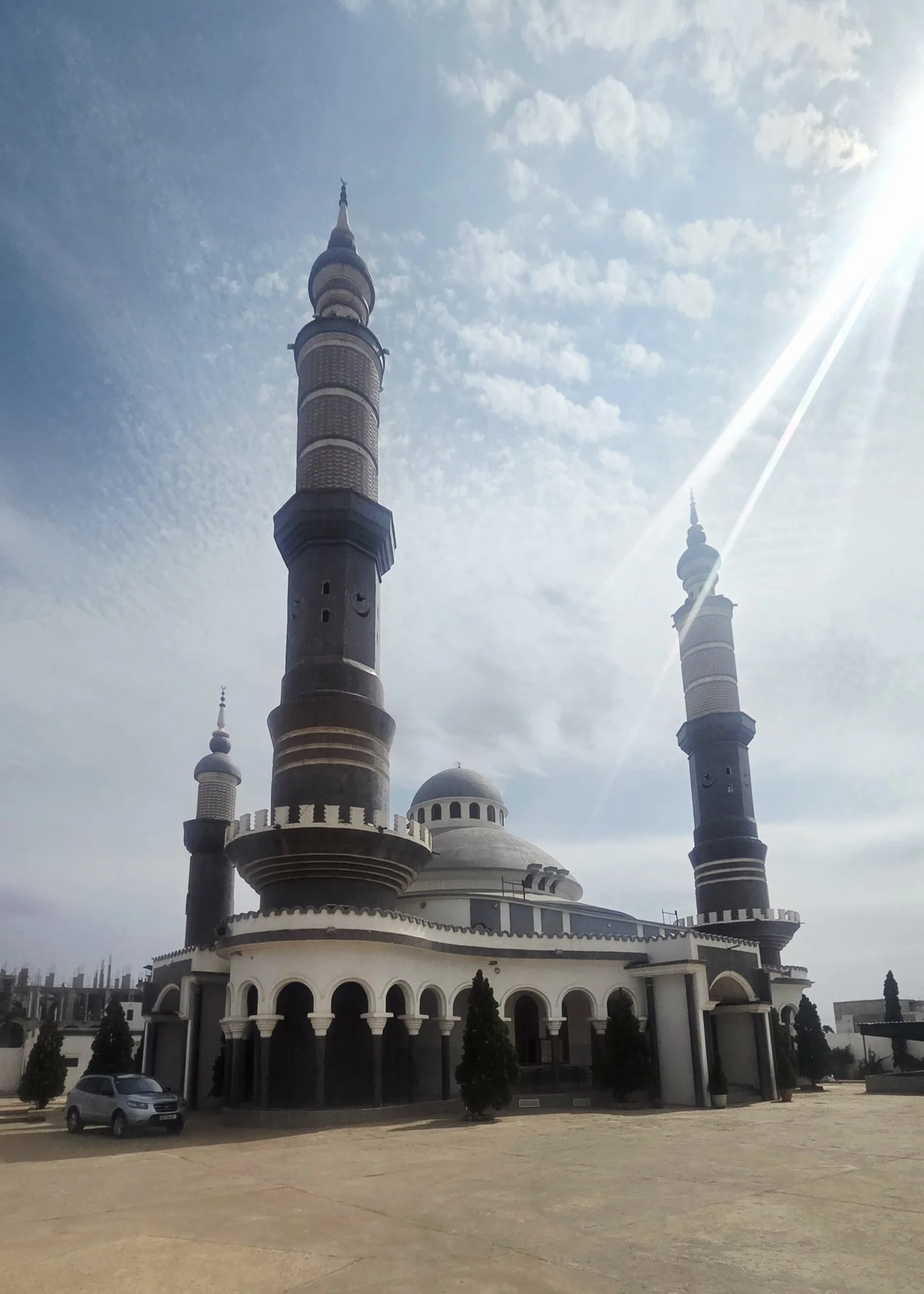
Unnamed Mosque: Located in Zac neighborhood of Thies region. Here, we were given a tour of the mosque and met some of the faculty and students who study here.
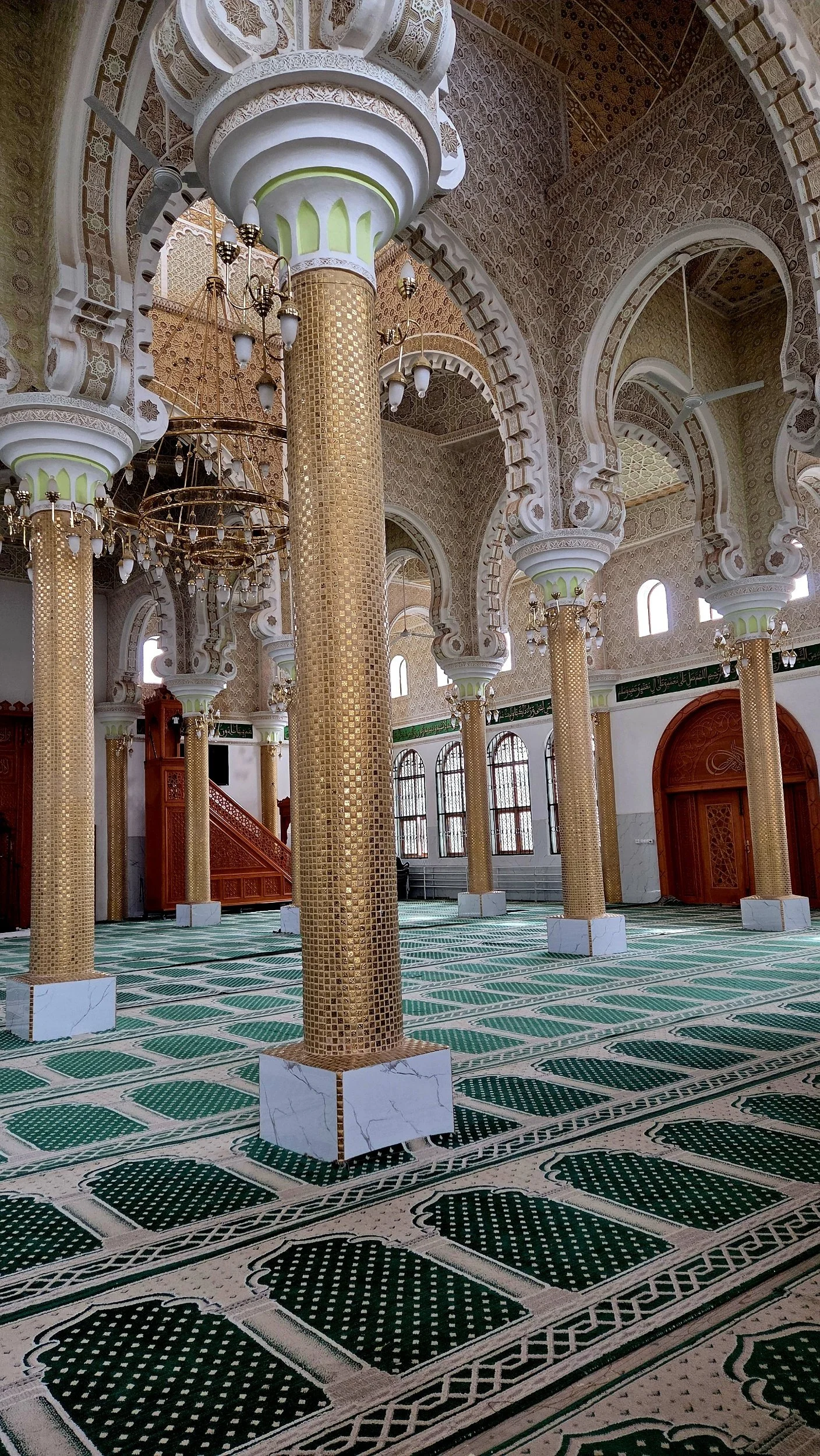
Unnamed Mosque: Still under construction. But the inside was visible from the window.
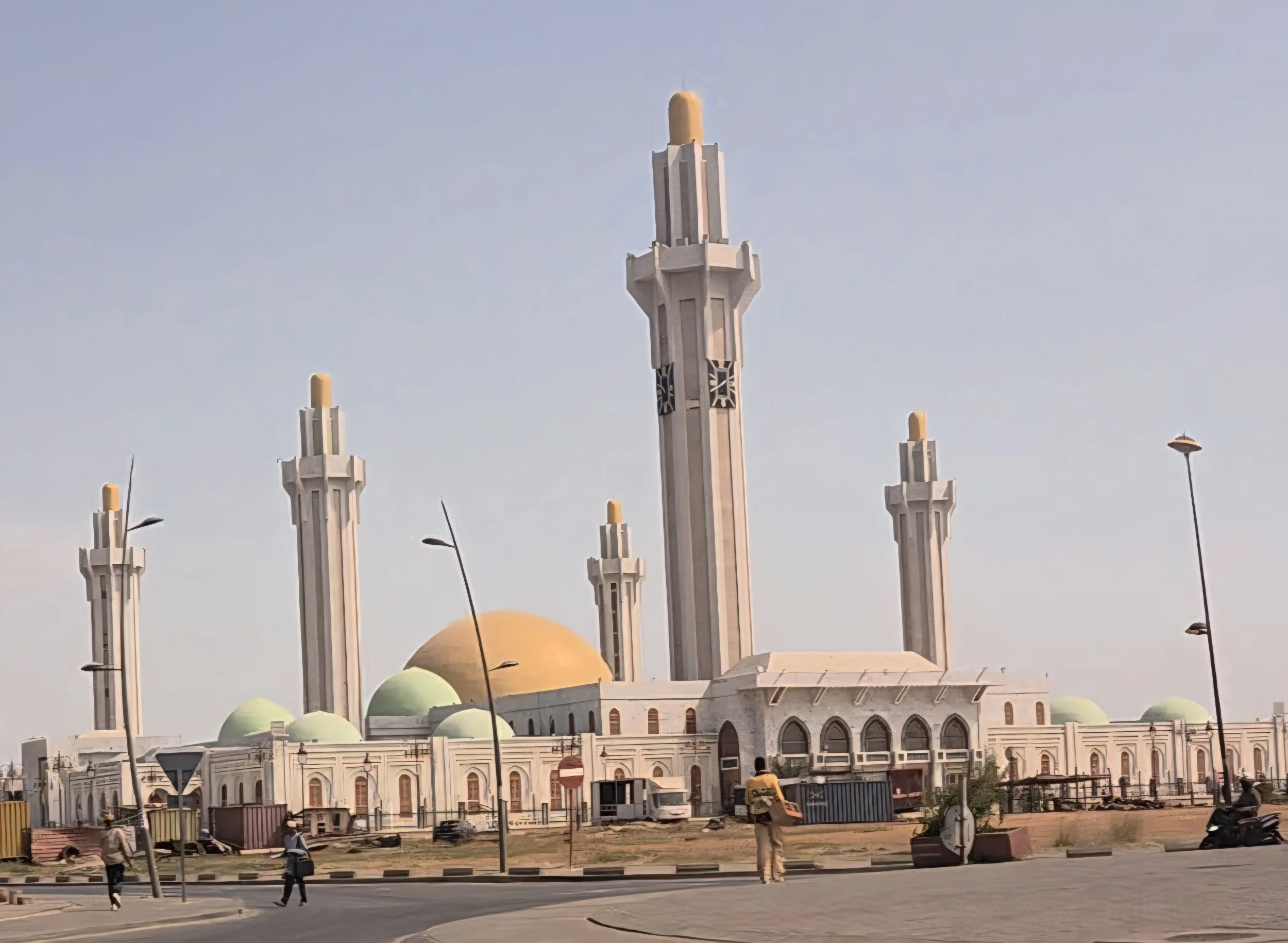
Massalikoul Djinane Mosque: The second largest mosque in West Africa. It can hold over 30k worshippers.
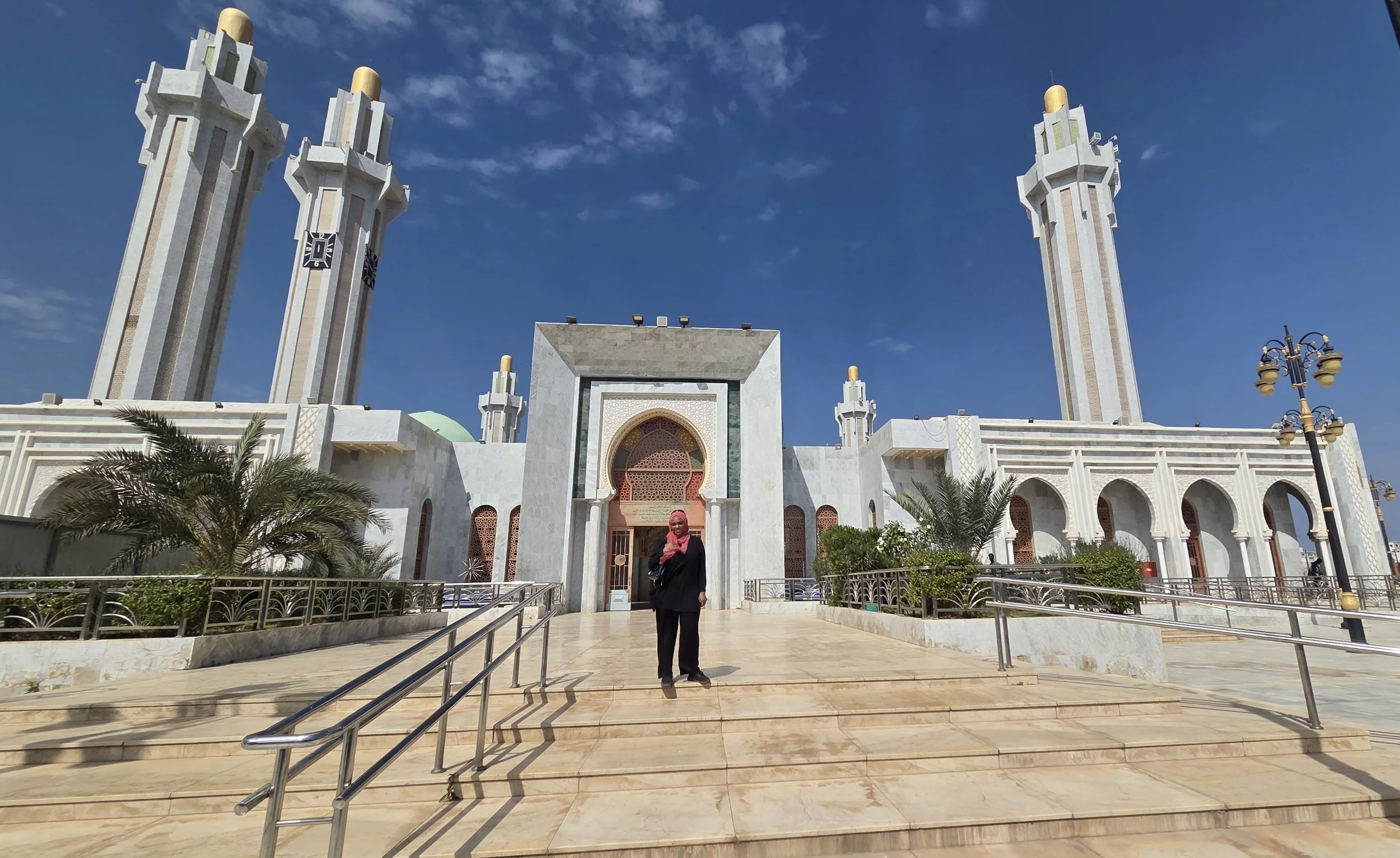
Massalikoul Djinane Mosque: A main entrance. This grand mosque has 5 minarets and domes!
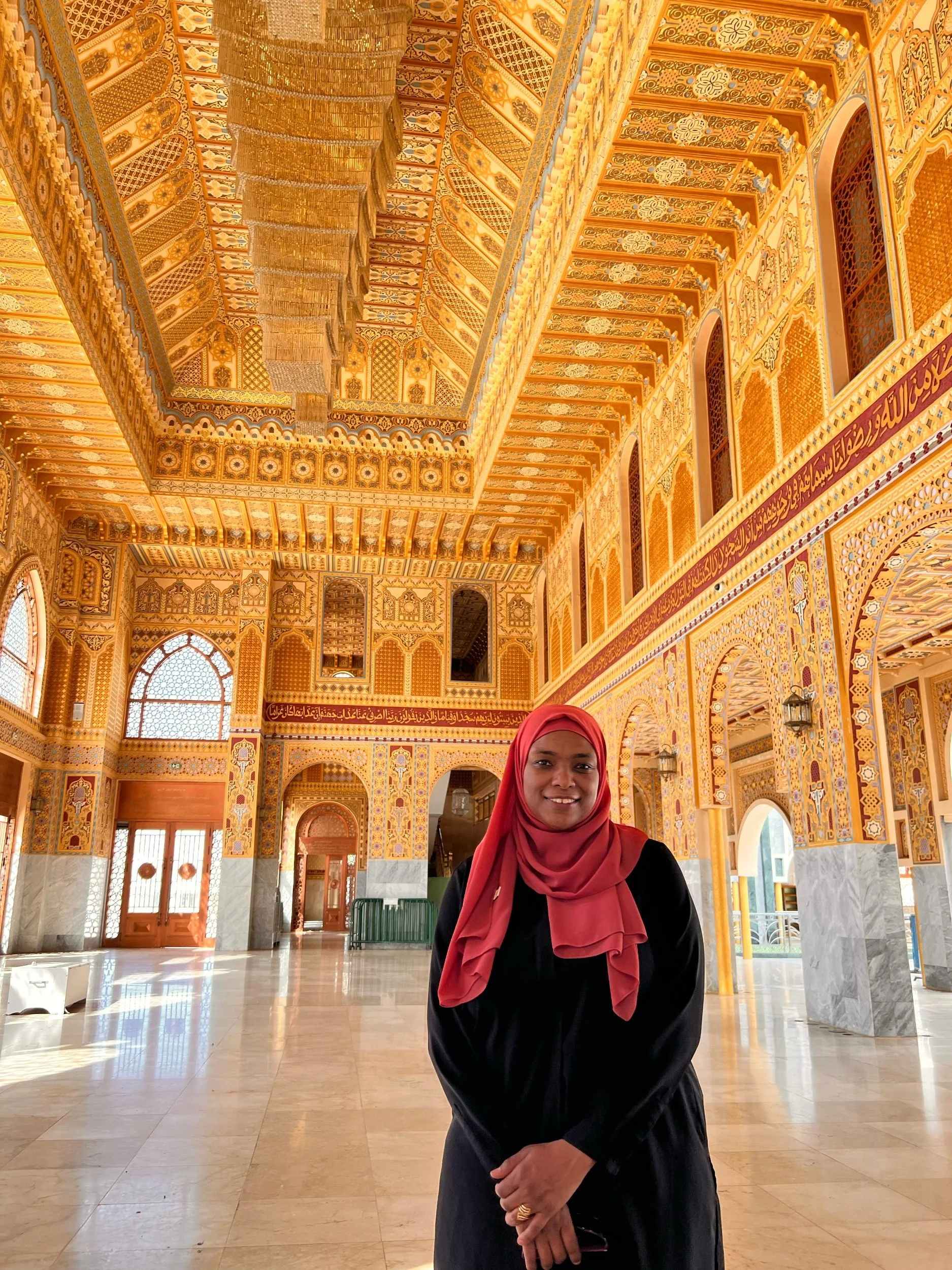
Massalikoul Djinane Mosque: The inside is beautiful. This is one of the halls outside the main prayer area.
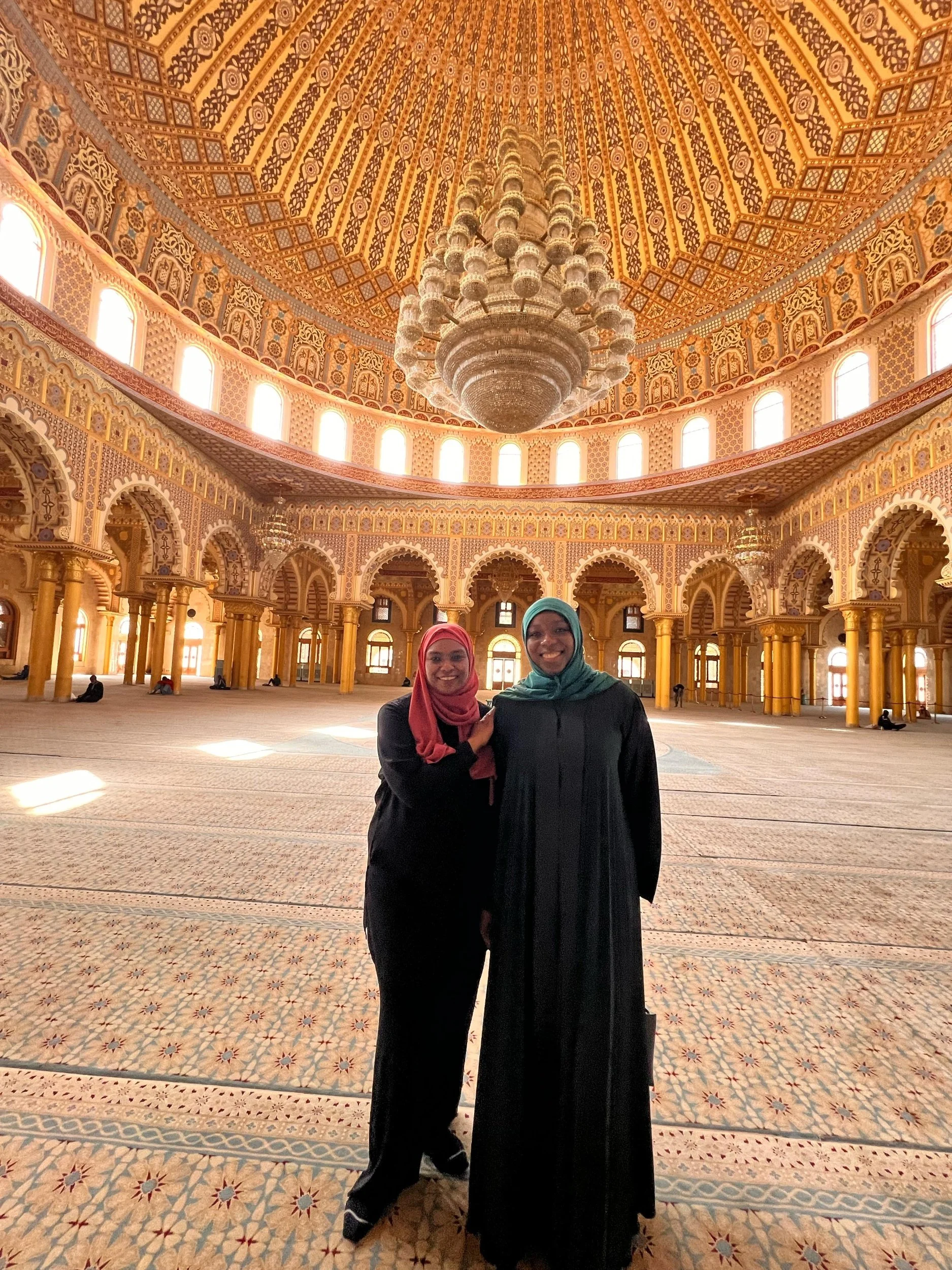
Massalikoul Djinane Mosque: This is the main prayer area. Though there are separate areas for men and women, , women also have an area in the main space.
Food, Fun, and the "No Fries" Rule
We kept our "touristy" itinerary simple: my sister wanted to ride quad bikes to the beach, I wanted a safari, and we both agreed a spa day was mandatory. The safari was interesting. I noticed that many of the animals moved in groups or in pairs. It reminded me of the verse in the Quran:
وَمِن كُلِّ شَىْءٍ خَلَقْنَا زَوْجَيْنِ لَعَلَّكُمْ تَذَكَّرُونَ ٤٩
49. And of everything We have created pairs, that you may remember (the Grace of Allâh).
The Holy Quran | Chapter 51, Verse 49
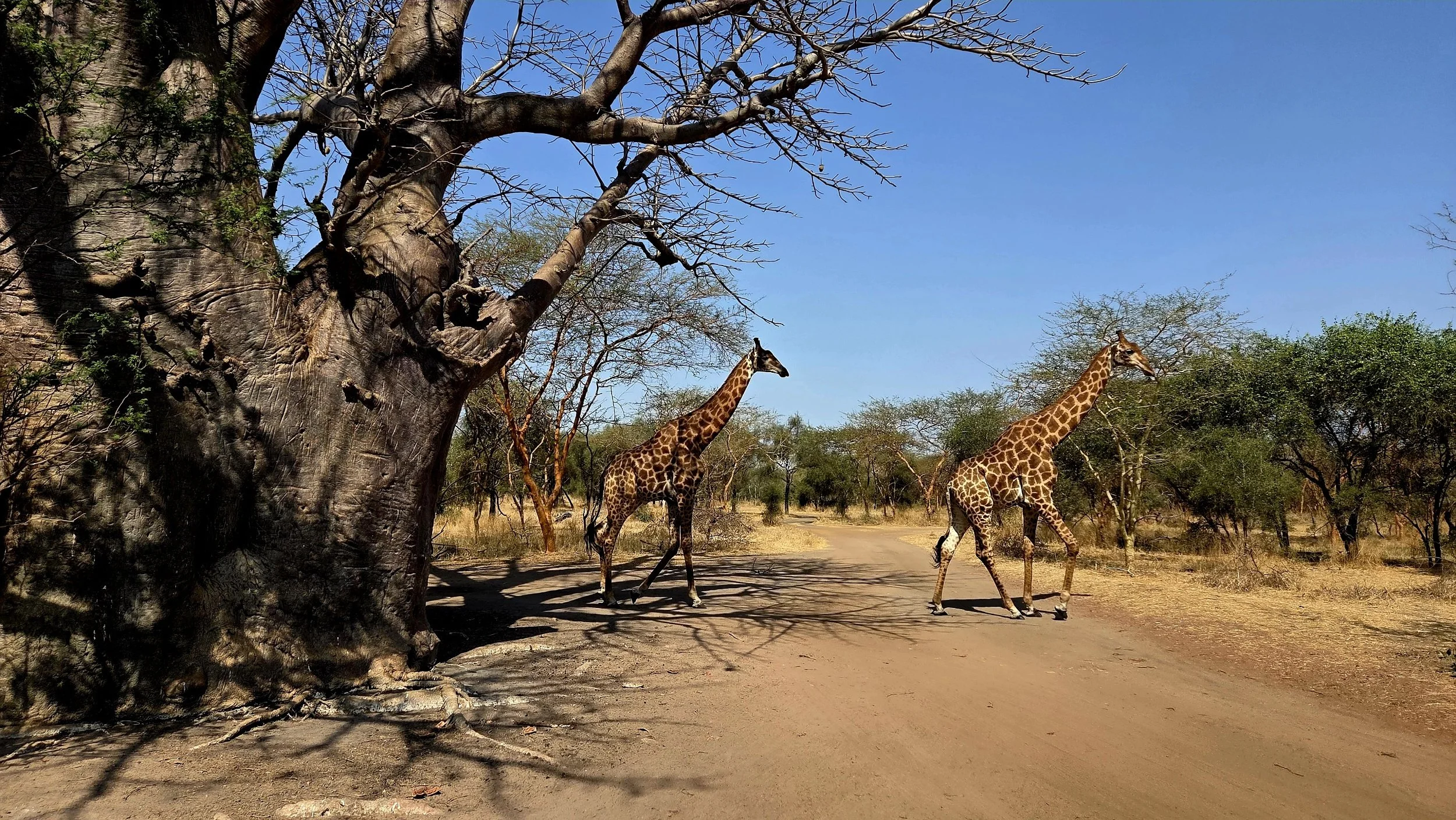
Bandia Wildlife Reserve: A couple of Giraffes ❤️
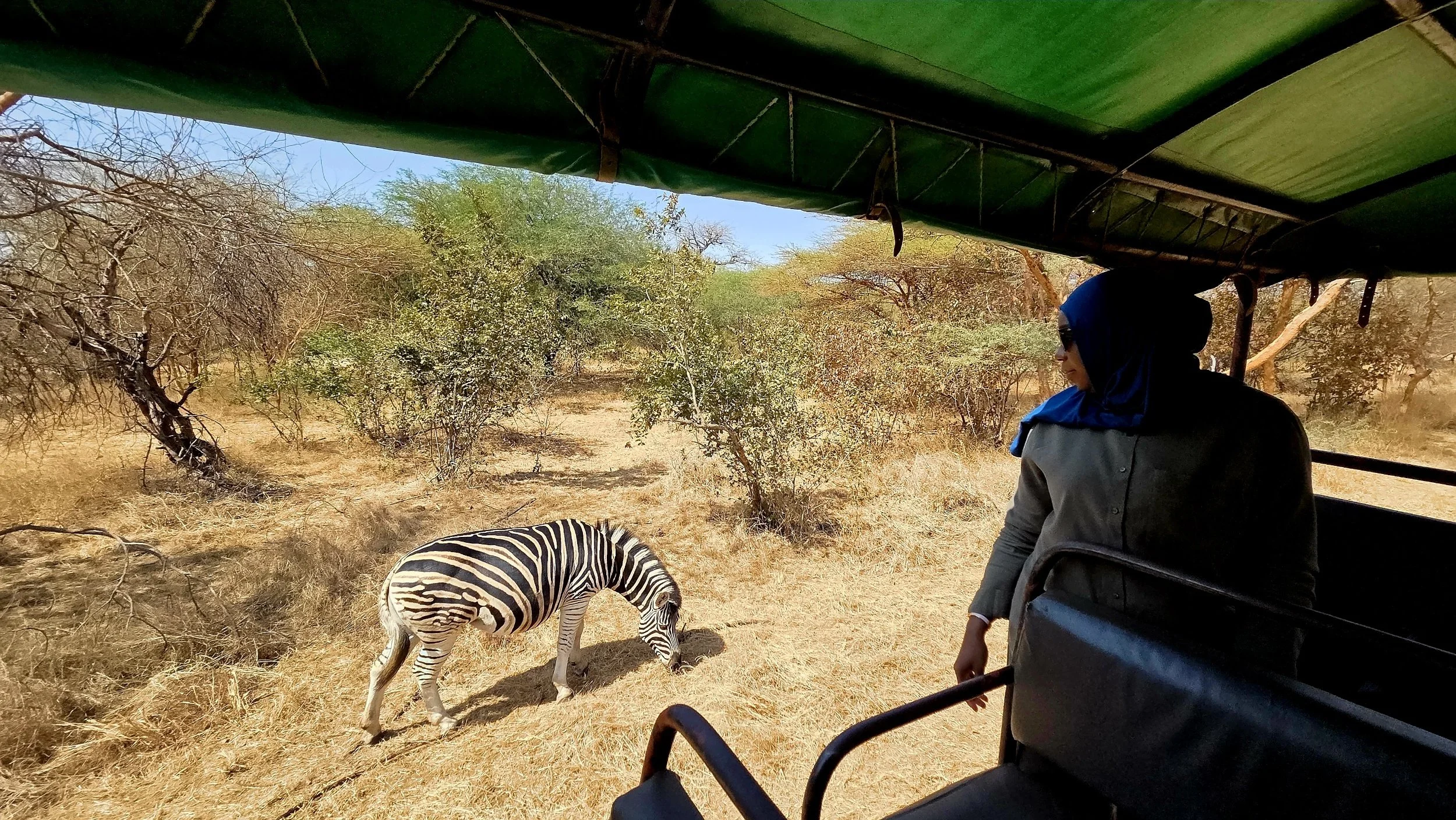
Bandia Wildlife Reserve: Apparently zebras are wild and shouldn’t be approached. But we were lucky that they came super close to the safari truck.
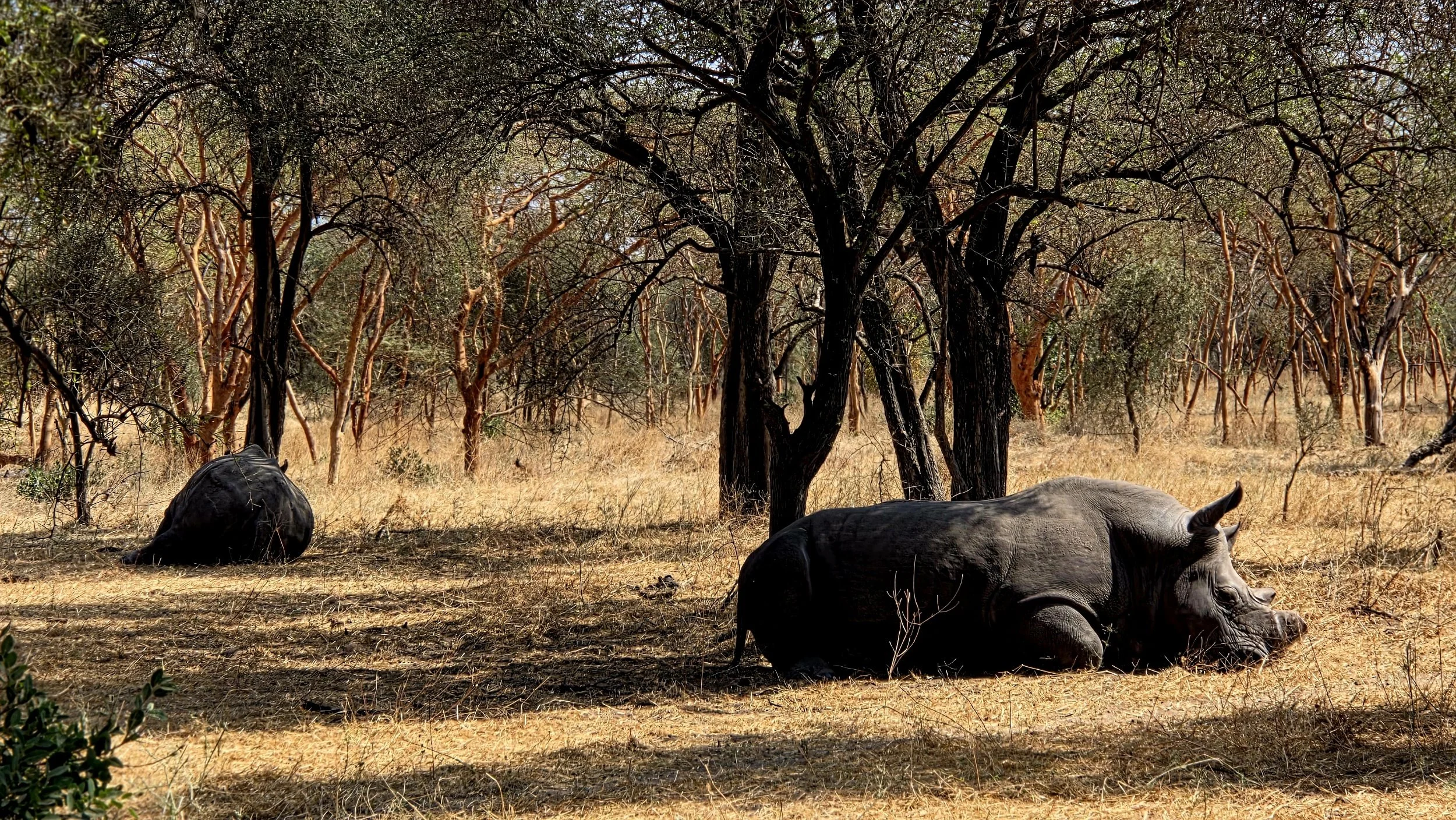
Bandia Wildlife Reserve: These two Rhinos are the only two in the reserve, but apparently hate each other and in 25 years have not had a baby rhino. 💔
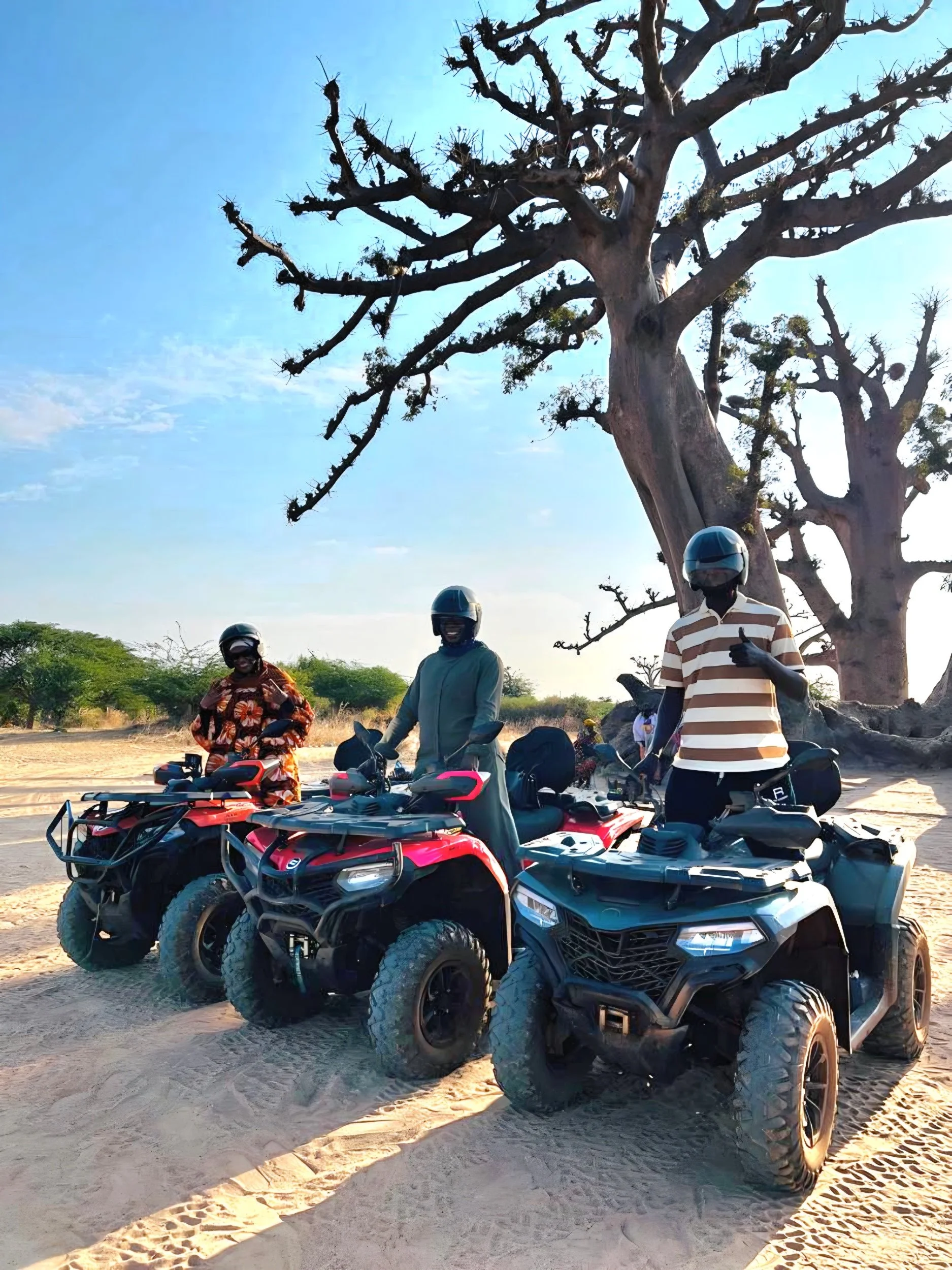
A Popular Fallen Baobab Tree in Saly: The ATV ride to the beach included a pit stop at the tree. A beautiful thing happened here that I talk about in my Quran Reflection, “The Four Ladies under the Baobab Tree.” If you look closely, you can see the ladies behind us.
While the tours were fun, I think the real priority for my sister was the food. Before we even landed in Dakar, she made me promise to dive into the local cuisine and—crucially—stay away from French fries.
(Sigh) I did my best. But ultimately, I couldn't uphold the "no fries" rule. I’m a work in progress!
That said, I did expand my palate. I tried several traditional Senegalese dishes, exotic fruits I’d never heard of, and even a roasted oyster! I still can’t believe I tried the oyster; it wasn't bad, but I don’t think I’ll be ordering it again.
The national dish, Thieboudienne, was delicious—I could eat that seasoned rice all day long. My sister pointed out that the only time I actually cleared my entire plate was when I ordered the rice on its own. I also loved Dibi (barbecued lamb) and a dish called Thiébou Nar —which we ate in a "hole-in-the-wall" restaurant packed with locals watching the Senegal vs. Sudan match. I’m not a soccer fan, but the energy of Senegal’s victory was infectious.
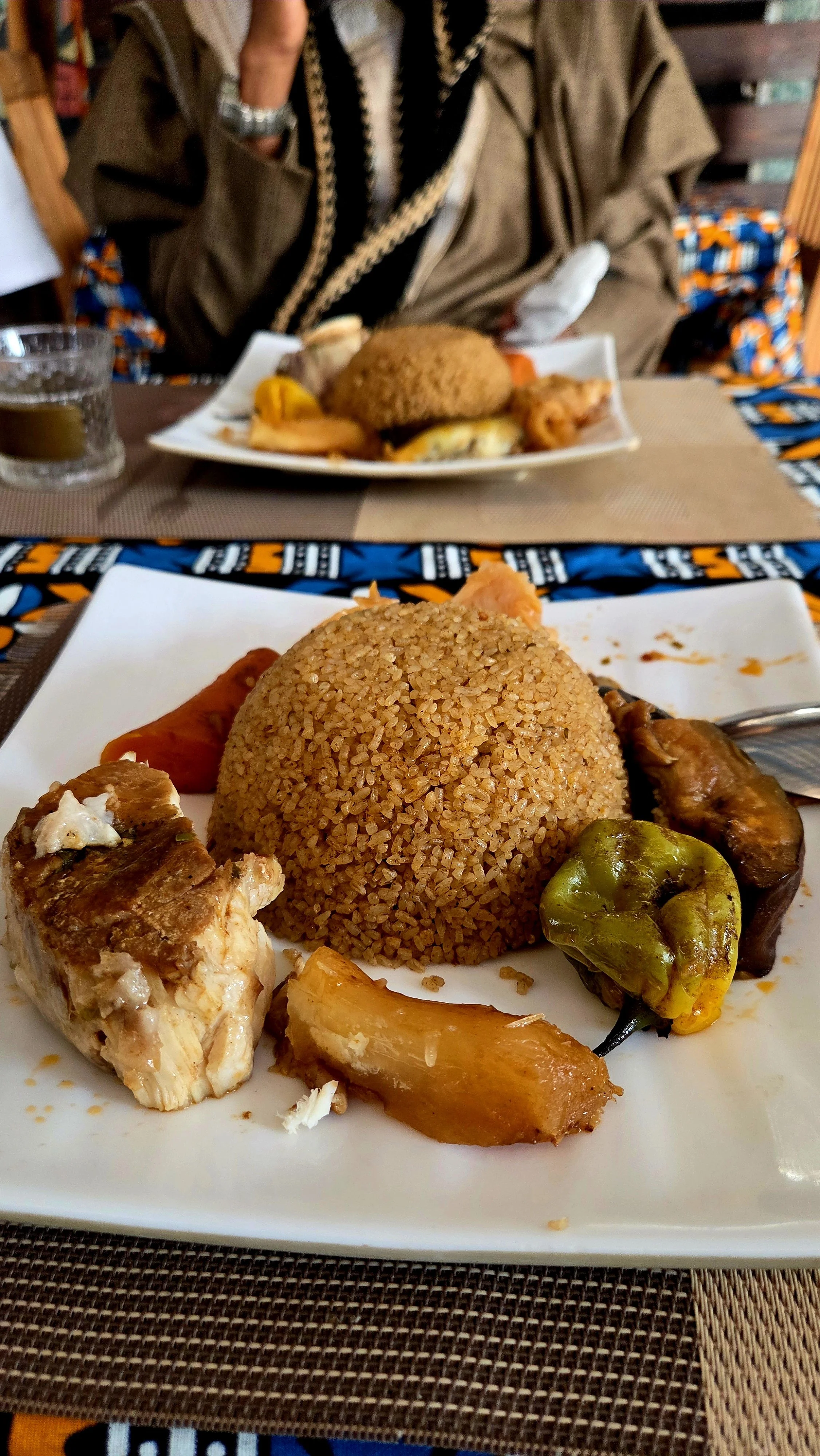
Thieboudienne: That rice is the bees knees!!!
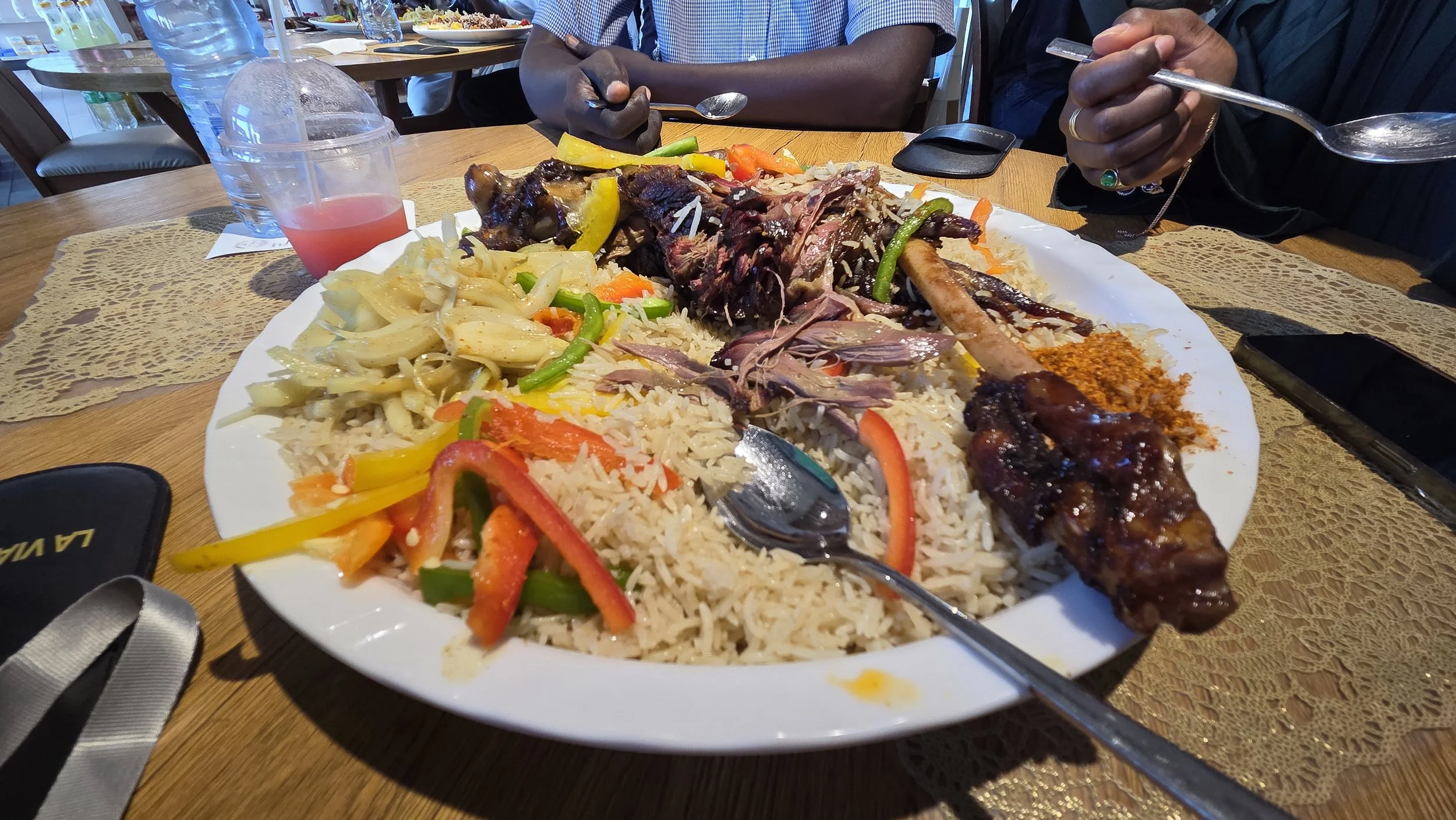
Thiébou Nar: This was legit yummy rice and meat - served family style on one plate.
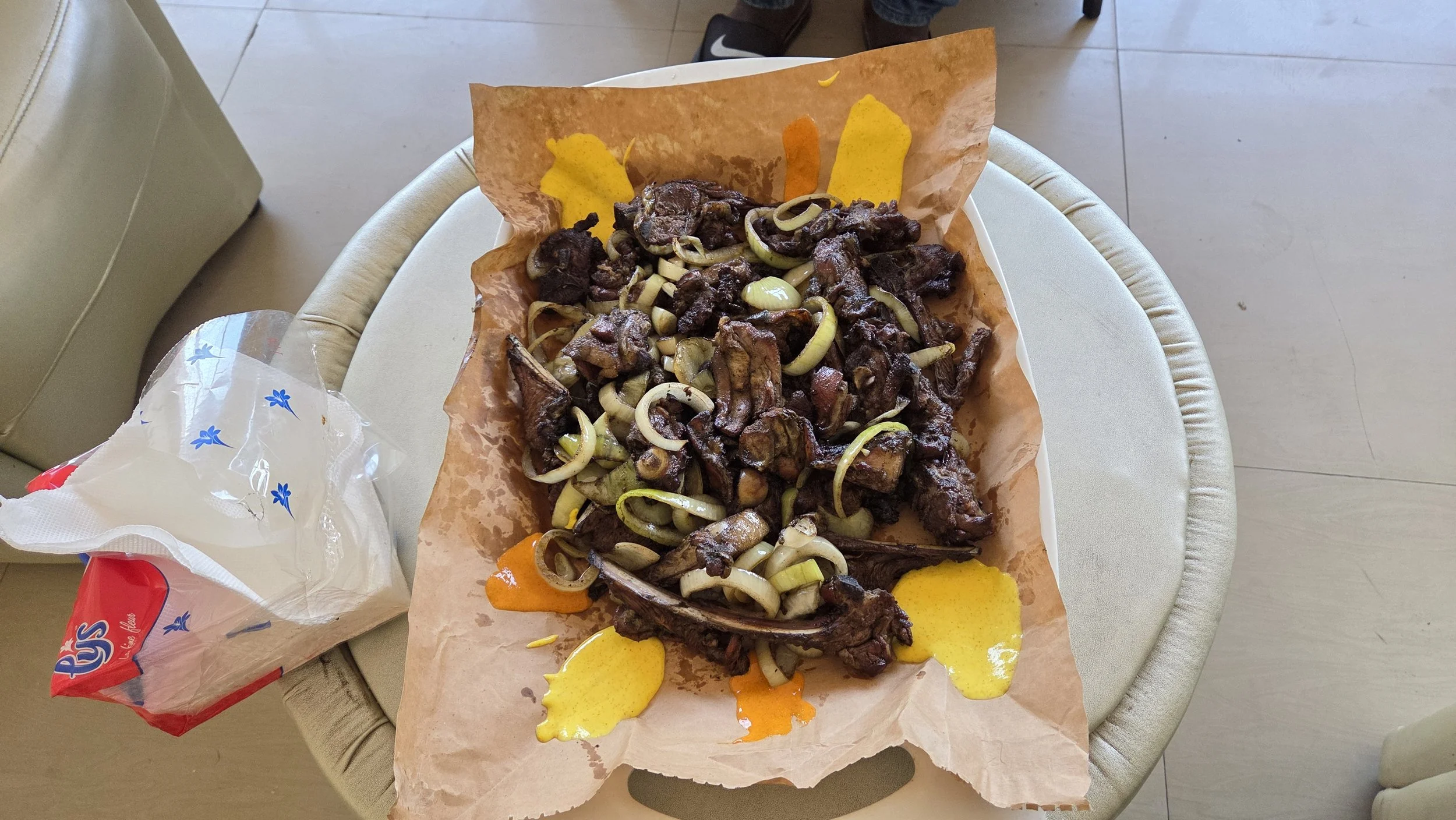
Dibi: I don’t like lamb at all. But this was absolutely delicious! It’s prepared by barbequing in a huge oven that burns a special type of log. They don’t even cut up the log - just slowly push the log into the oven as it burns.
As for the fruit, the Baobab fruit was a highlight. My hotel served the juice, so it was fascinating to see the actual fruit it comes from. I also tried Koni, which was a real experience—you peel it back like an onion to reveal pockets of jelly. It was fun to eat, even if it was completely tasteless!
Overall, Senegalese cuisine gets a solid thumbs up. Even if some dishes looked a bit "scary" (like my sister’s plate of sea urchins), there was always a perfect balance of local flavors and home comforts.
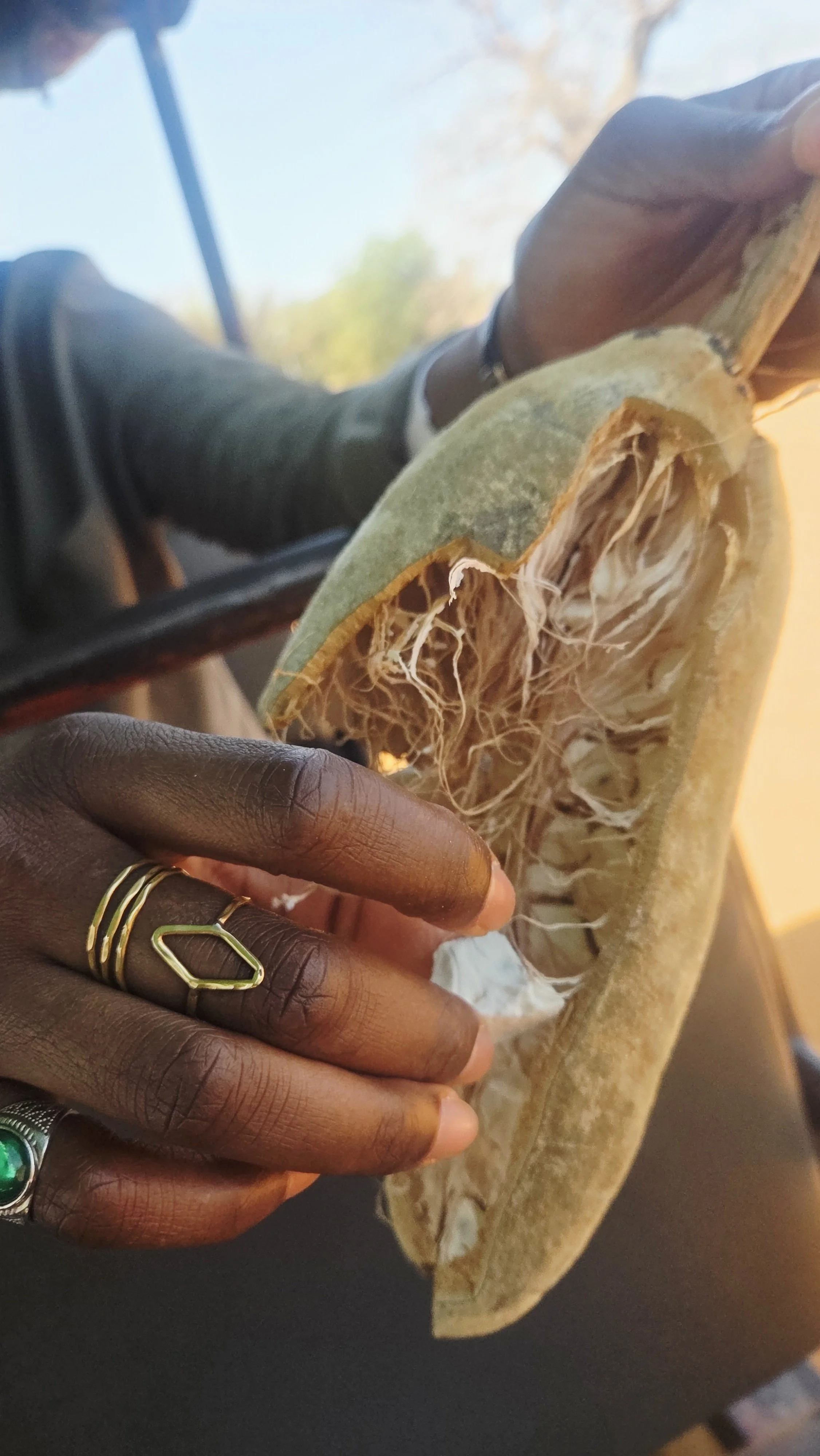
Baobab Fruit: We pulled the seeds out to suck the white outer later off. It was a bit like sucking a big pomegranate seed.
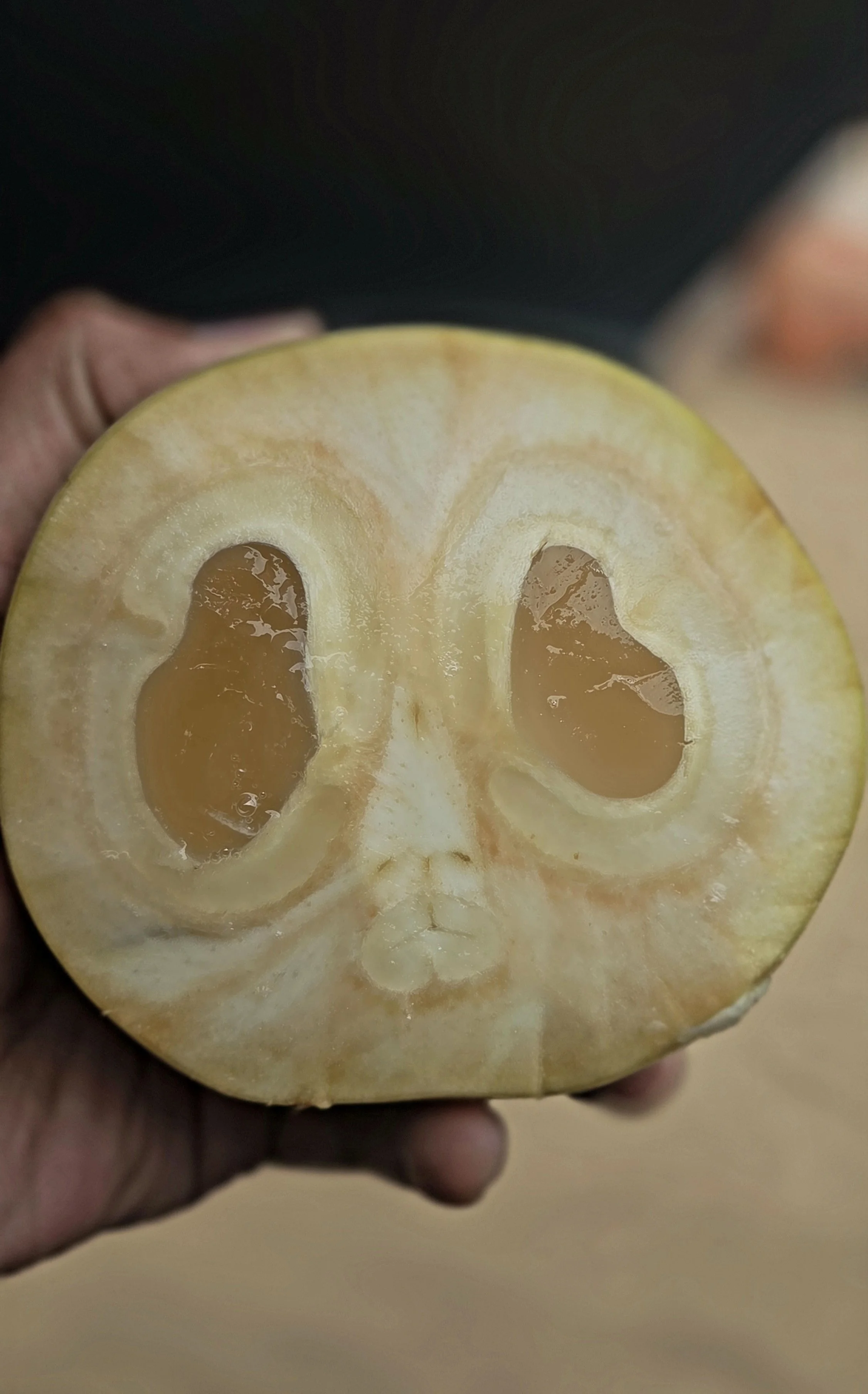
Koni Fruit: It kind of looks like a face. You have to not think about it when you suck out the jelly.
Bonus Pics
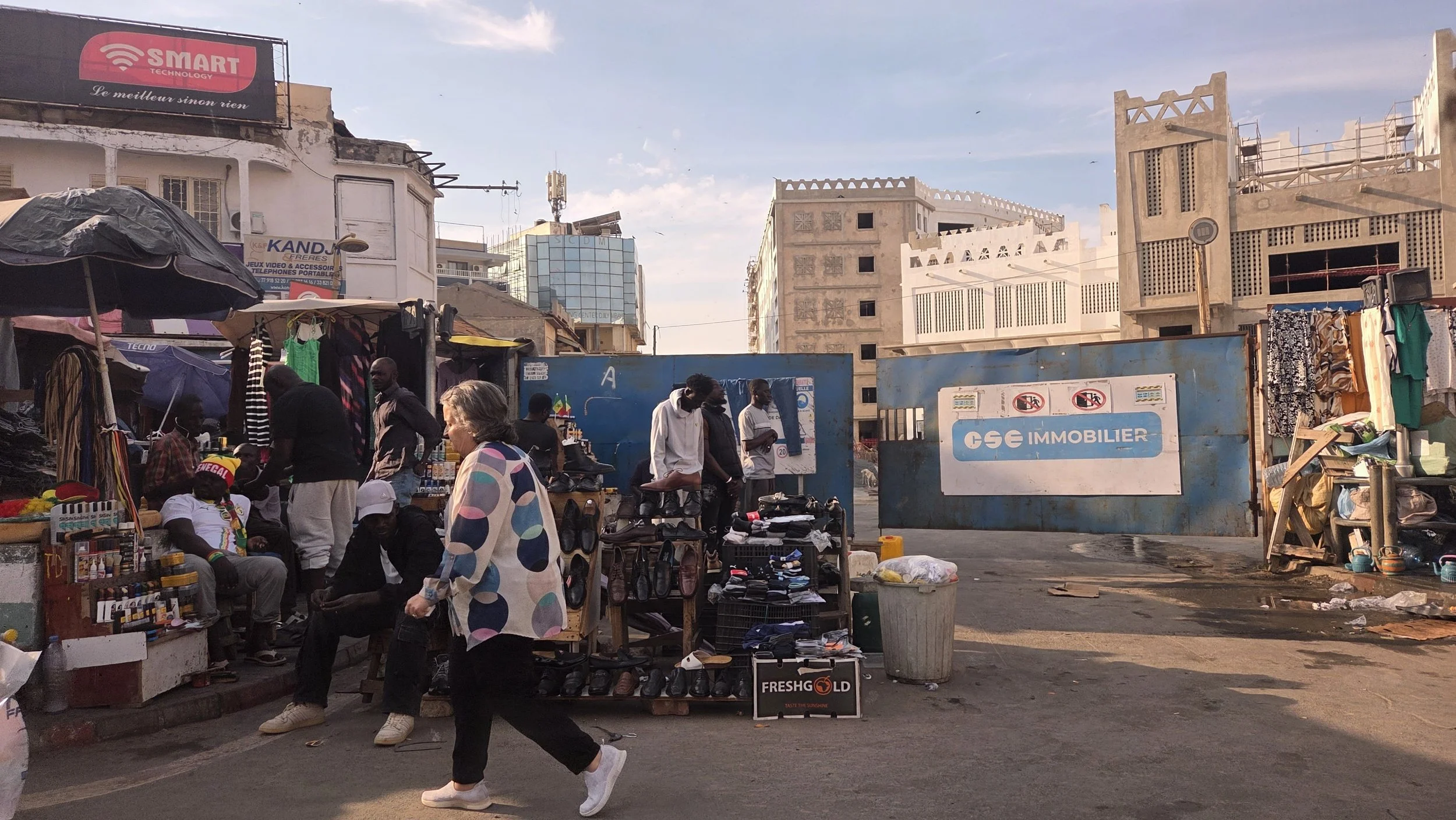
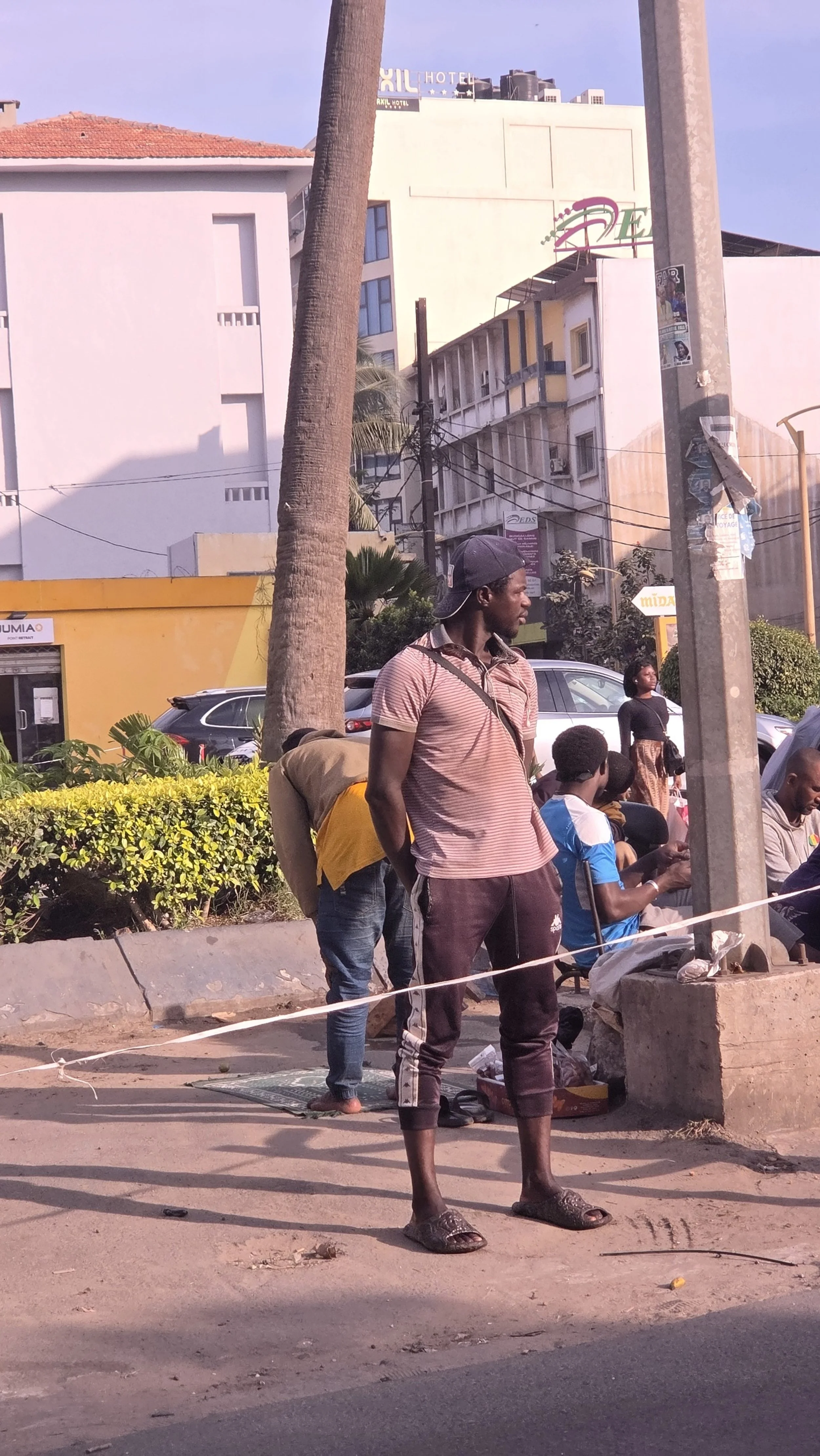
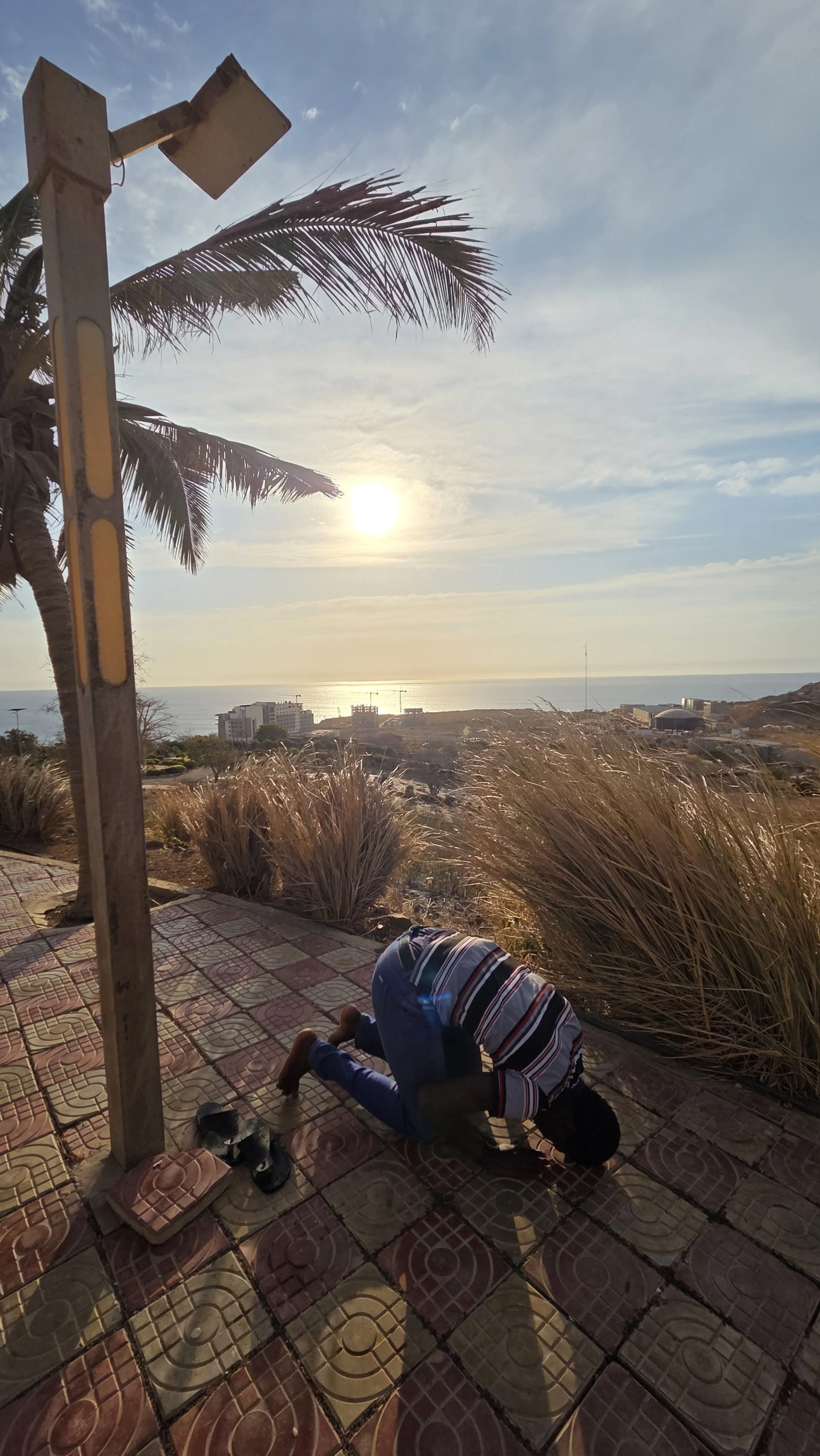
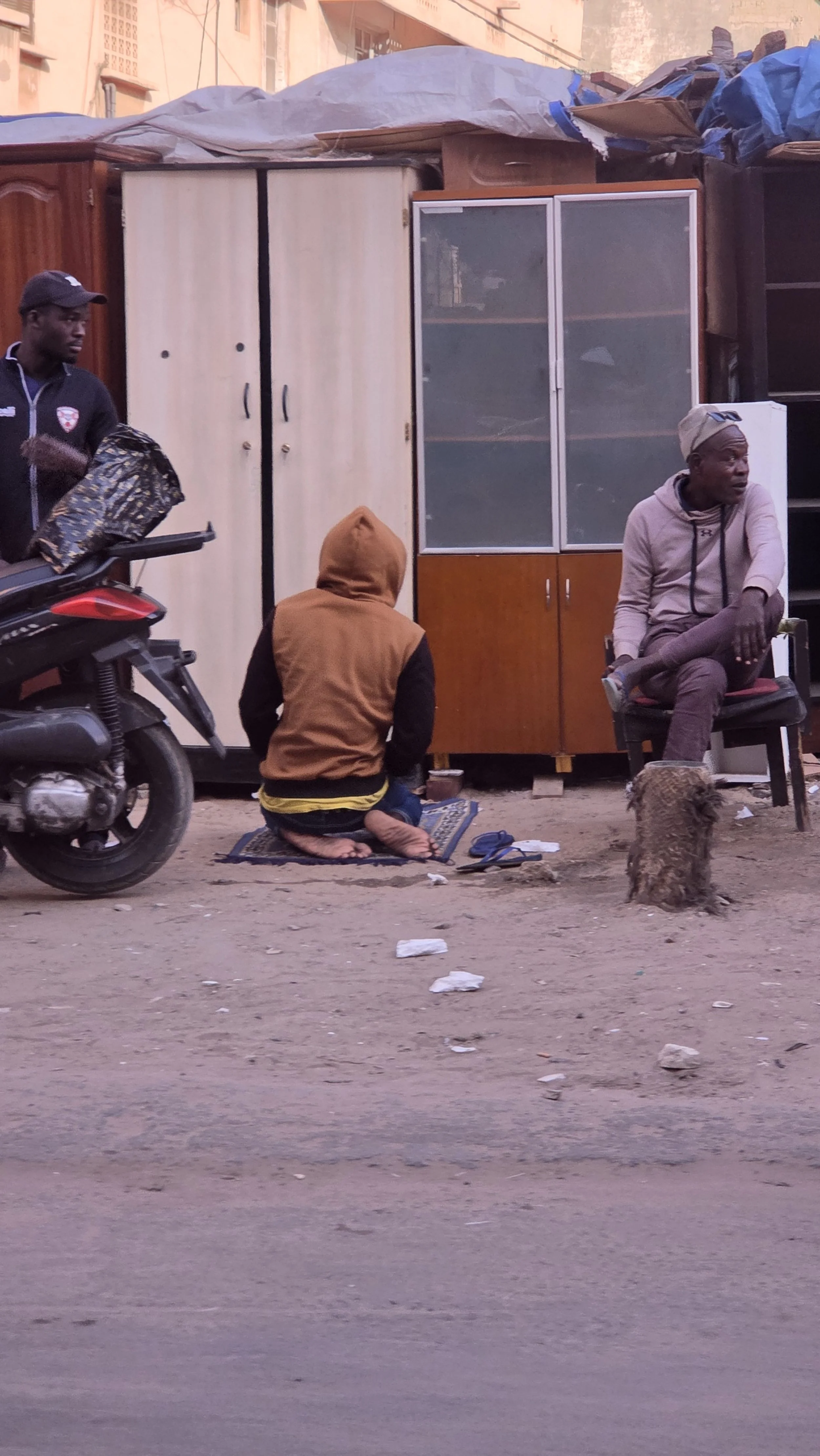
During my entire time in Dakar, I found particular joy in seeing people praying out in the open. It was a beautiful, living reminder of the Hadith of the Prophet Muhammad (Peace Be Upon Him):
أَخْبَرَنَا الْحَسَنُ بْنُ إِسْمَاعِيلَ بْنِ سُلَيْمَانَ، قَالَ حَدَّثَنَا هُشَيْمٌ، قَالَ حَدَّثَنَا سَيَّارٌ، عَنْ يَزِيدَ الْفَقِيرِ، عَنْ جَابِرِ بْنِ عَبْدِ اللَّهِ، قَالَ قَالَ رَسُولُ اللَّهِ صلى الله عليه وسلم " جُعِلَتْ لِيَ الأَرْضُ مَسْجِدًا وَطَهُورًا أَيْنَمَا أَدْرَكَ رَجُلٌ مِنْ أُمَّتِي الصَّلاَةَ صَلَّى " .
It was narrated that Jabir bin 'Abdullah said: "The Messenger of Allah (ﷺ) said: 'The earth has been made for me a place of prostration and a means of purification, so wherever a man of my Ummah is when the time for prayer comes, let him pray.'"
Sunan an-Nasa'i 736
It was bittersweet when it was time to go home. A piece of my heart will forever be in Dakar - but I returned home with a renewed sense of purpose - ready to take on the new year. Will I be back? Hmmmm. Perhaps soon, inshaAllah.
May Allah bless the people of Senegal with prosperity, guidance, goodness, and never-ending Teranga.
